
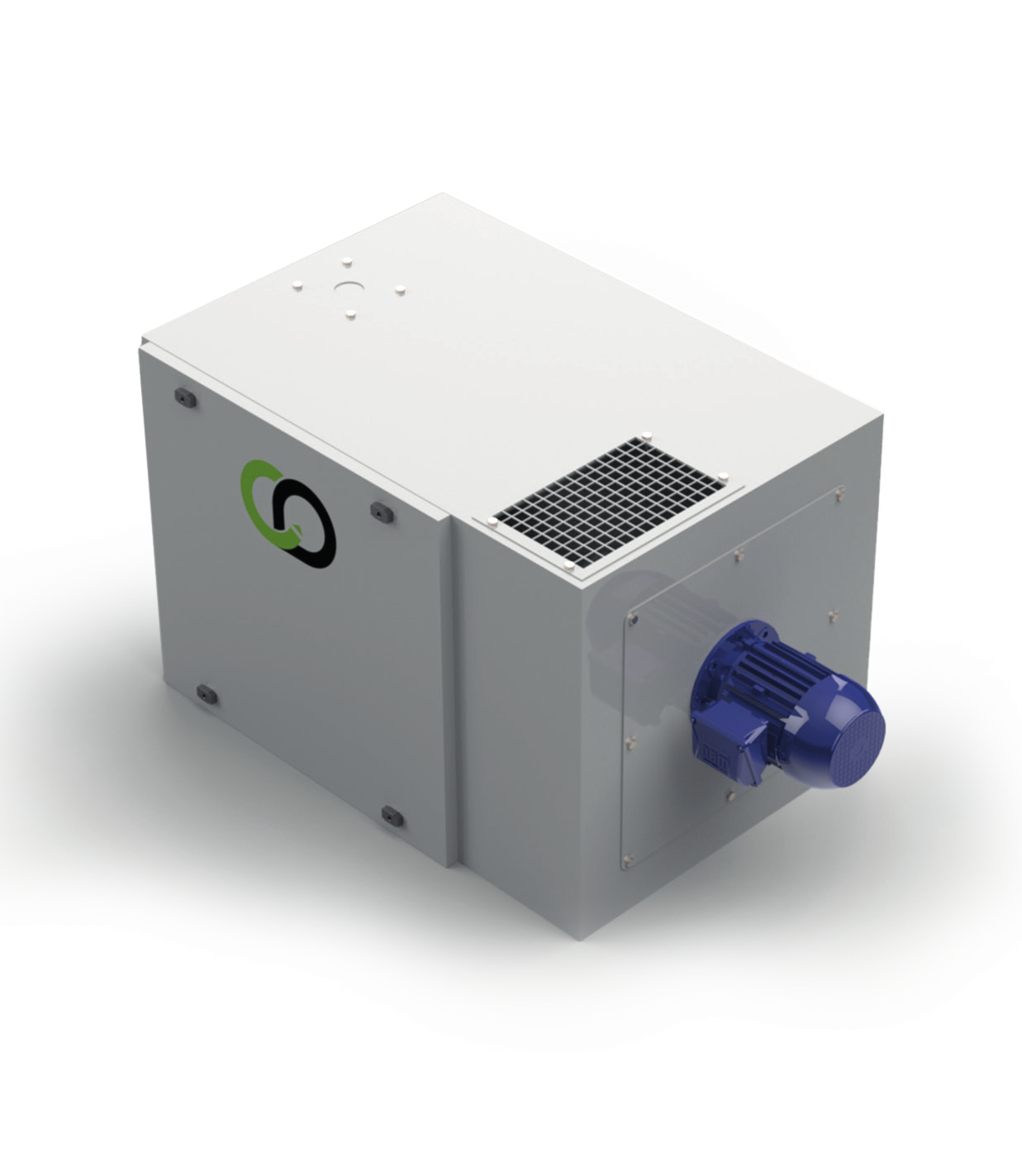
BHS-H
Elevated installation
600 – 3 600 m³/h
Data sheet BHS-HFrench industrial expertise · Since 1994
Lathes, machining centres, grinders: capture oil mist inside the machine enclosure and filter it on the machine or centrally.
01 / CNC machining
The tool atomises the cutting fluid into fine droplets, and contact with hot parts vaporises some of it, which recondenses into a very fine aerosol. The faster the spindle turns and the higher the coolant pressure, the denser the mist.
France has no regulatory limit value for oil aerosols. The French Health Insurance recommends not exceeding 0.5 mg/m³ averaged over 8 hours (recommendation R 451).
02 / CNC machining
The machine must be enclosed: the enclosure is extracted at its highest point, away from the fluid jets, so that no liquid is drawn in. The airflow renews the air in the enclosure within a few seconds and keeps a slight negative pressure that stops mist escaping through the gaps.
Let the extraction run for a few seconds after the spindle stops before opening the door: most of the mist escapes when the door opens.
03 / CNC machining
BHS-H, mounted above the machine, or BHS-V, floor-standing: 600 to 3,600 m³/h, built-in fan, one unit per machine or for a few neighbouring machines. The air passes through a demister where the droplets coalesce, then a very high efficiency filter; the recovered oil drains out at the bottom.
Beyond four or five machines, an HE central unit from 4,000 to 27,000 m³/h, connected by ductwork, simplifies maintenance: 99% efficiency, E10 final filter, fan selected together with the ductwork.
04 / CNC machining
Make and model of the machines, enclosure volume, type of fluid (neat oil or emulsion) and coolant pressure, number of machines running at the same time, space available above or beside each machine.
Compare the equipment
These data sheets let you compare technologies and operating conditions. Compatibility with your process and the equipment configuration are confirmed before the final choice.
Elevated installation
600 – 3 600 m³/h
Data sheet BHS-H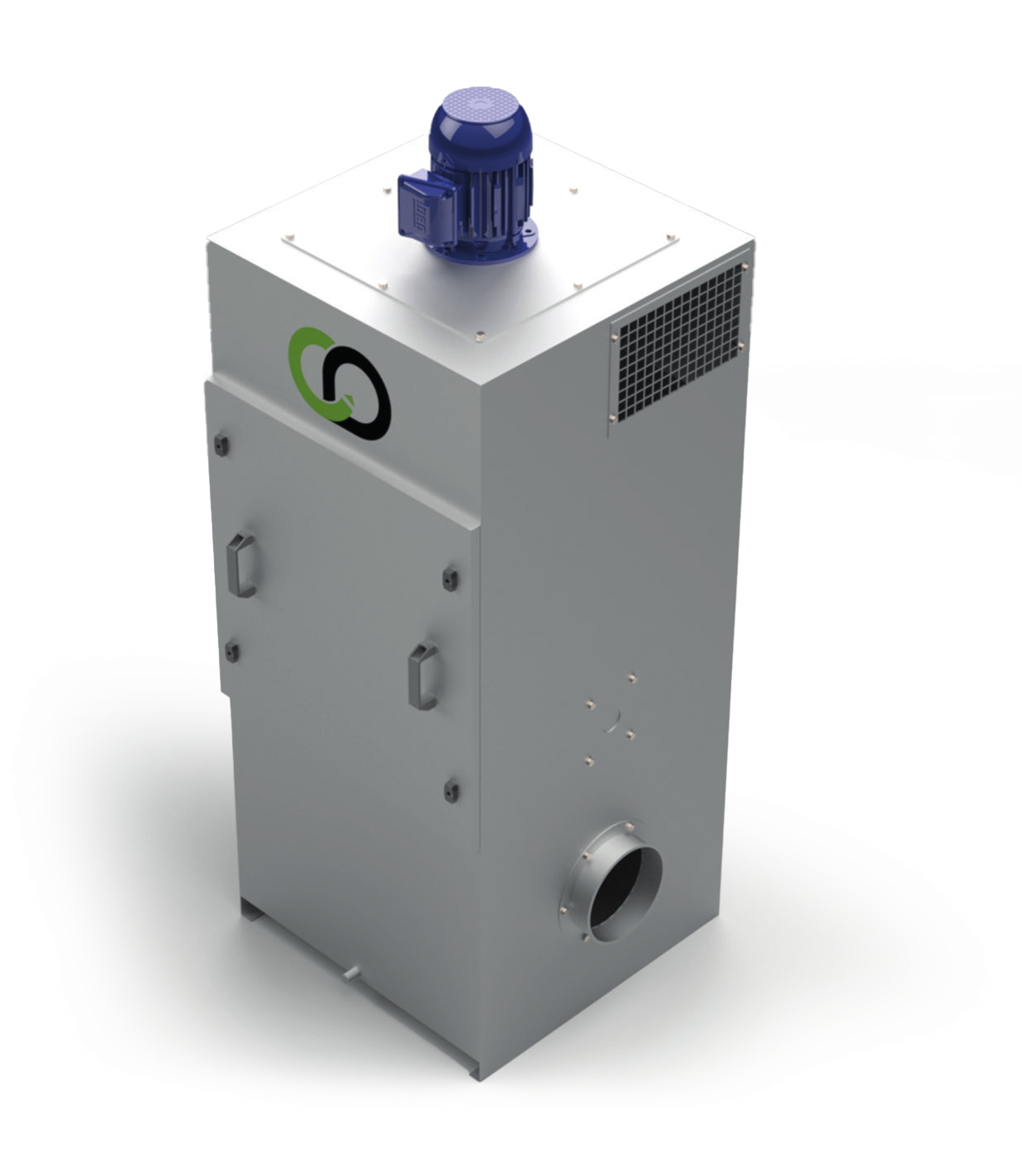
Vertical floor installation
600 – 3 600 m³/h
Data sheet BHS-V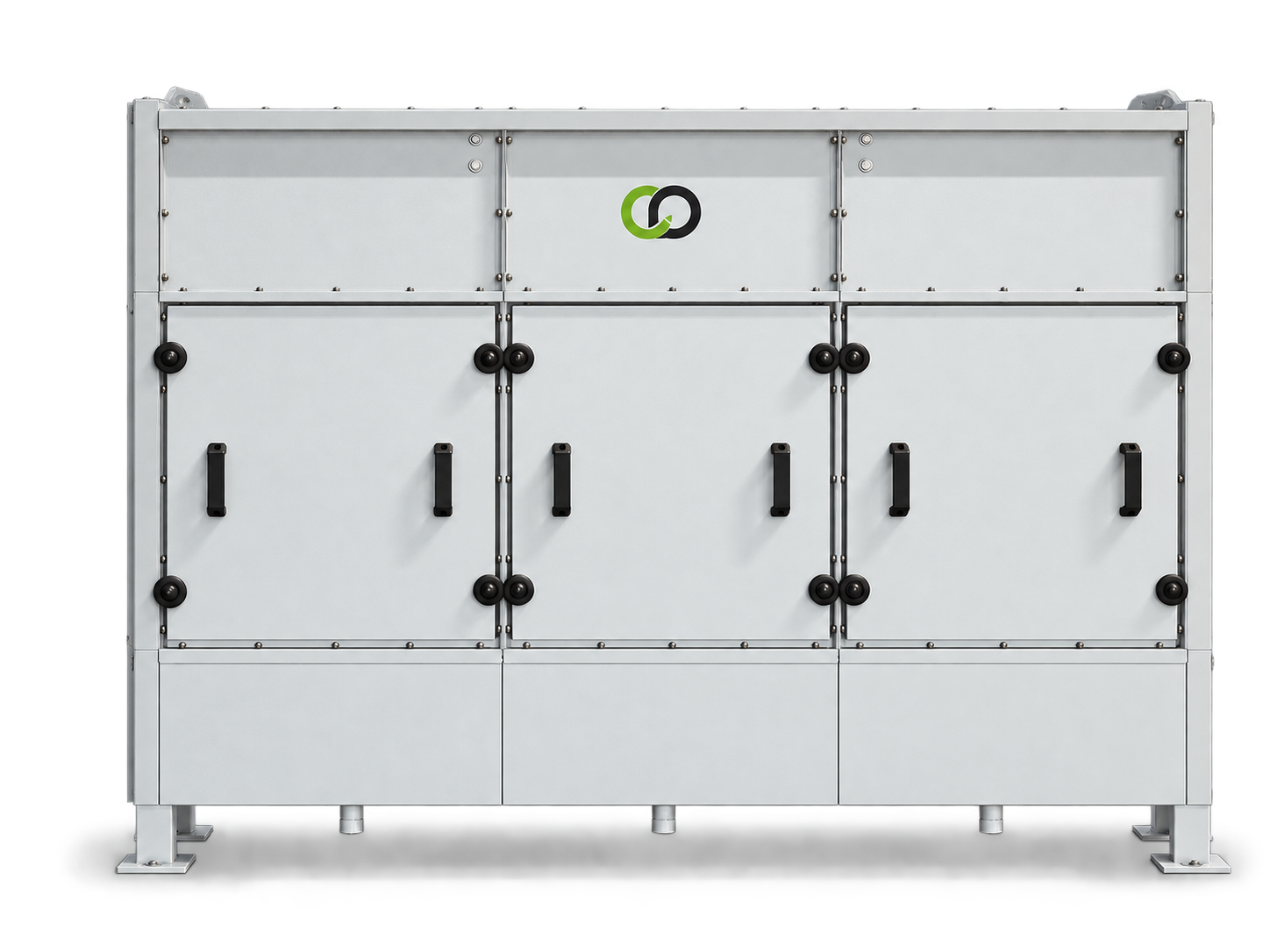
Central filtration
4 000 – 27 000 m³/h
Data sheet HE central unitUseful answers
The BHS-H sits on or above the machine and keeps the floor clear. The BHS-V stands on the floor beside the machine and can serve two machines through a short duct run.
Add up the extraction airflow of each enclosure, weighted by the number of machines running at the same time, and choose the unit size that covers this total at the ductwork pressure drop. For example, ten machines extracted at 1,200 m³/h, eight of them running simultaneously, need about 9,600 m³/h: an HE 10,000.
Yes, with the same units. The emulsion produces a wetter aerosol; condensate recovery must be designed for an aqueous liquid.
Continue your selection
Your industrial project
Send us photos of the workstations, the materials worked, which workstations run at the same time and your working hours: we size the capture and filtration and send you a costed quote.
Contact us
A technician from our engineering office studies your needs and proposes the right solution for your workshop: machine, capture, ductwork and filtration.
Reply within 48 working hours.
Your request, step by step
Pollutant, workstations, constraints: a few lines are enough. A photo of the installation helps us a lot.
Capture, airflow, ductwork and filtration are sized for your site, together with you if anything needs clarifying.
Machine, options and price, in detail: you decide with full knowledge of the facts.
Your cookie choices
With your consent, we use audience and advertising measurement cookies to understand how the site is used, improve it and see which ads bring us enquiries. You can accept, refuse or choose, and change your choice at any time. Learn more