
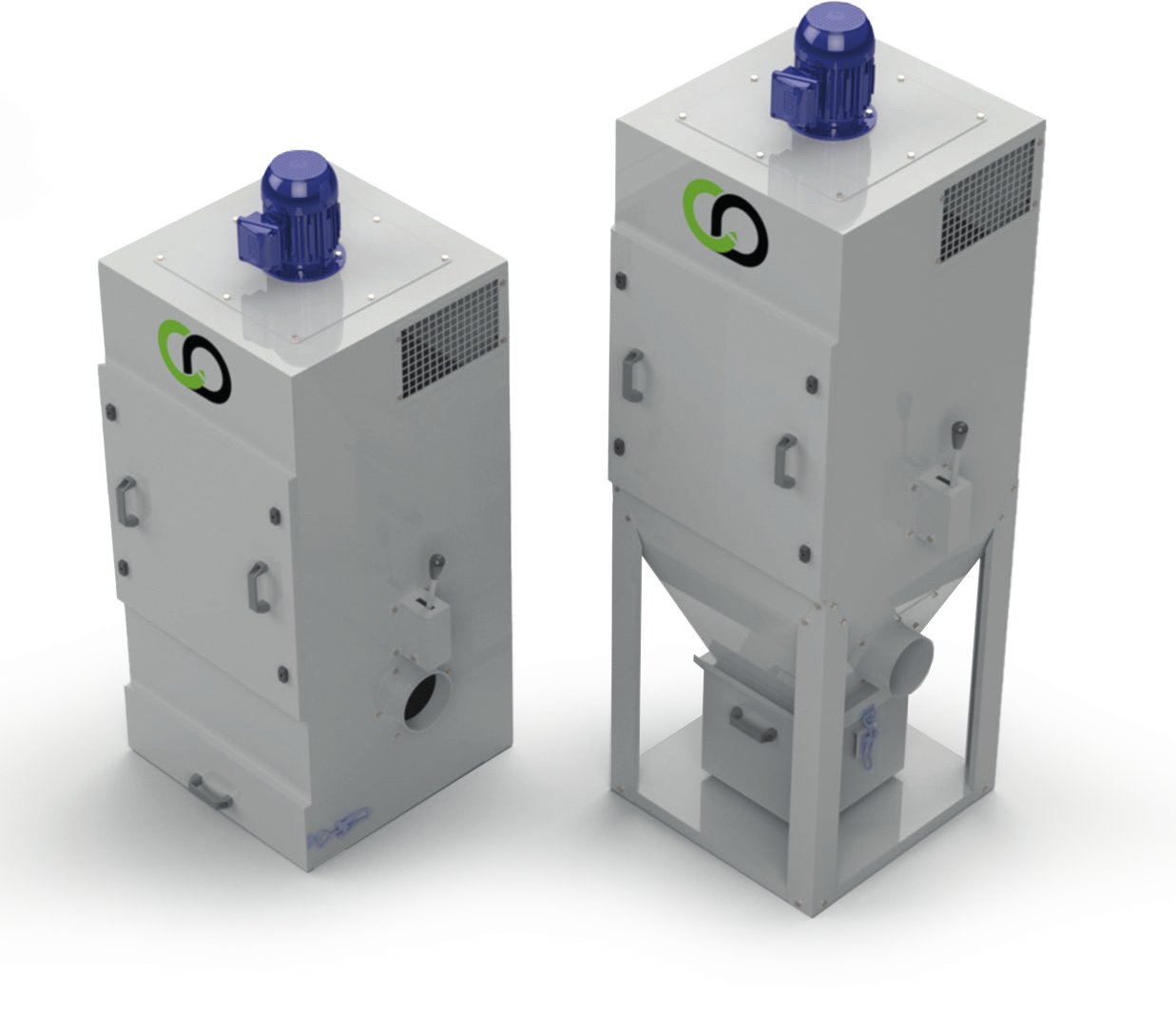
DA
Occasional use
400 – 5 000 m³/h
Data sheet DAFrench industrial expertise · Since 1994
Manual cleaning, motorised cleaning or compressed-air pulses: how filter cleaning works and when to change the filters.
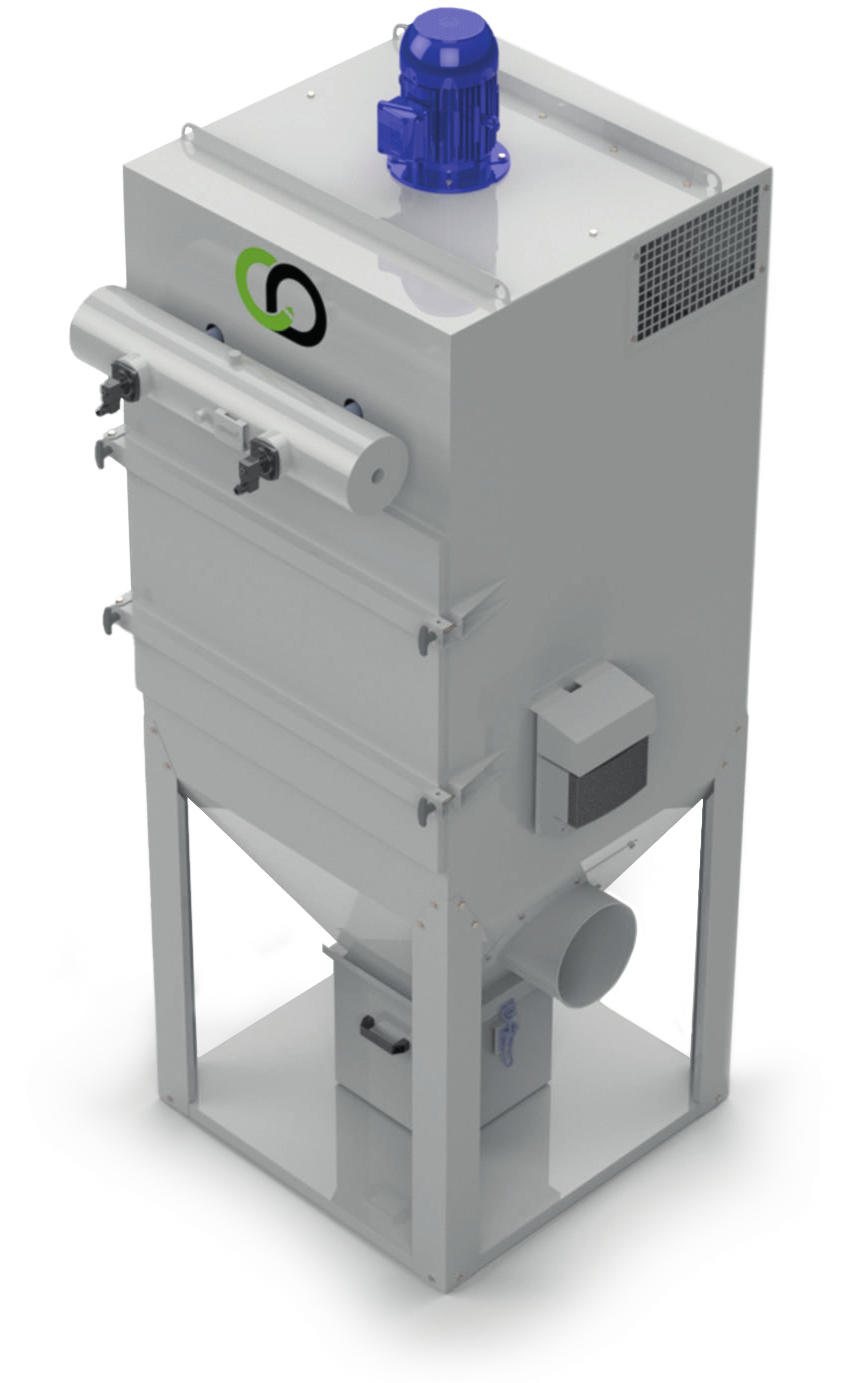
01 / Filter cleaning
Filter cleaning removes the dust cake built up on the surface of cartridges, sleeves or bags, to restore sufficient extraction airflow. Without it, the pressure drop across the filter rises and the airflow at the workstations falls.
Across the CAPTAIR ranges, three principles coexist: manual cleaning with the fan stopped (DA), motorised cleaning at the end of the cycle (DAS) and reverse compressed-air pulses during operation (DAS CC). The choice depends on the dust load and the production rate.
02 / Filter cleaning
DA: manual cleaning of the filter elements, fan stopped. DAS: motorised cleaning at the end of the cycle, unit stopped. DAS CC: an electronic sequencer sends reverse compressed-air pulses into the cartridges, one row after another, while the unit is running.
The DA with bag has no cleaning system: the bag is removed to be emptied.
03 / Filter cleaning
A clean filter has a low pressure drop; it rises as the dust cake thickens and the airflow at the workstations falls. A pressure-drop indicator, which measures it, shows when to clean.
Loss of capture that the filters do not explain often comes from the ductwork: a duct blocked by deposits, a closed damper, a leak, a moved hood.
04 / Filter cleaning
When cleaning no longer brings the pressure drop back to its normal level, or in the event of a tear (dust visible at the outlet). The interval depends on the dust and the operating hours: it is read on the indicator, not on the calendar.
Send us a photo of the unit’s rating plate and of the filter in place: we supply replacement cartridges, sleeves and bags, including for other makes.
Compare the equipment
These data sheets let you compare technologies and operating conditions. Compatibility with your process and the equipment configuration are confirmed before the final choice.
Occasional use
400 – 5 000 m³/h
Data sheet DA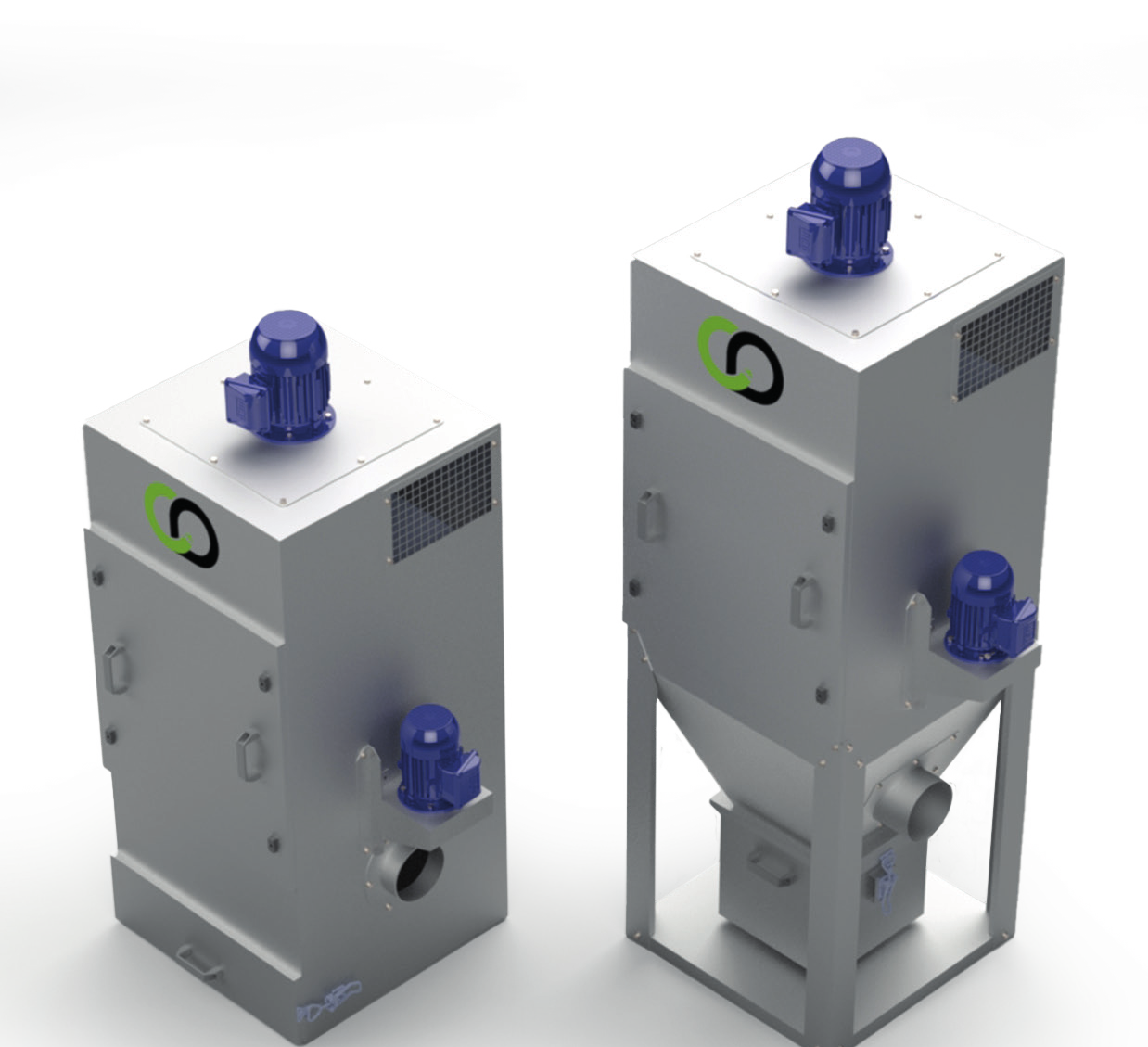
Daily intermittent use
400 – 5 000 m³/h
Data sheet DASContinuous production 24/7
600 – 19 200 m³/h
Data sheet DAS CCUseful answers
It is not recommended: compressed air applied from the outside drives the dust into the medium and can puncture it. Cleaning is done from the inside, by the unit’s own system.
When its pressure drop remains high after cleaning or when it is torn. The pressure-drop indicator shows it.
The airflow at the workstations drops and the pressure drop across the filter rises. A pressure-drop indicator lets you monitor its condition and trigger cleaning or replacement at the right time.
Continue your selection
Your industrial project
Send us photos of the workstations, the materials worked, which workstations run at the same time and your working hours: we size the capture and filtration and send you a costed quote.
Contact us
A technician from our engineering office studies your needs and proposes the right solution for your workshop: machine, capture, ductwork and filtration.
Reply within 48 working hours.
Your request, step by step
Pollutant, workstations, constraints: a few lines are enough. A photo of the installation helps us a lot.
Capture, airflow, ductwork and filtration are sized for your site, together with you if anything needs clarifying.
Machine, options and price, in detail: you decide with full knowledge of the facts.
Your cookie choices
With your consent, we use audience and advertising measurement cookies to understand how the site is used, improve it and see which ads bring us enquiries. You can accept, refuse or choose, and change your choice at any time. Learn more