
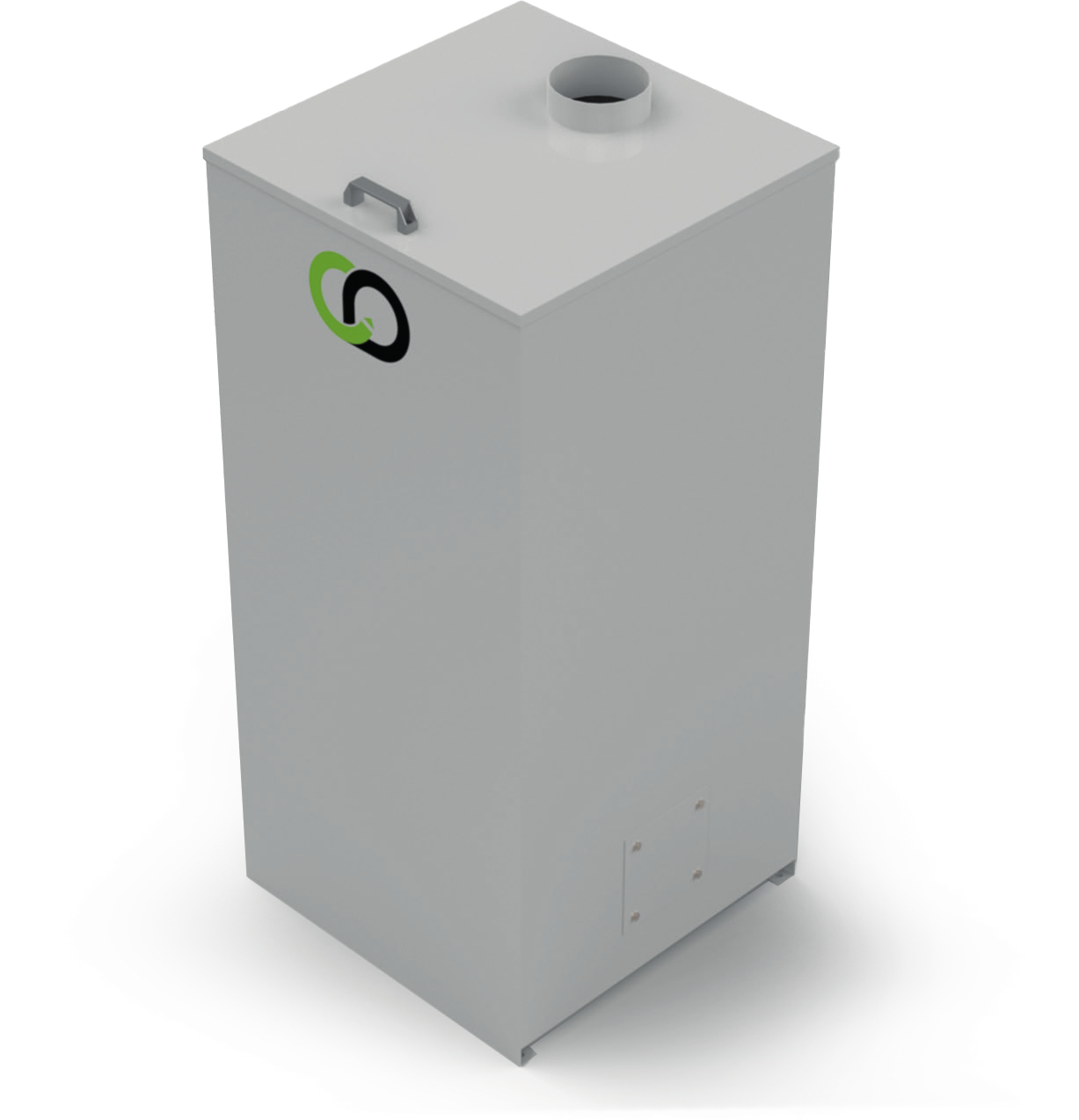
Bag-type DA
Low dust loads
250 – 2 000 m³/h
Data sheet Bag-type DAFrench industrial expertise · Since 1994
Sizing, capture, ductwork and operation: what determines the budget for an industrial dust extraction installation.
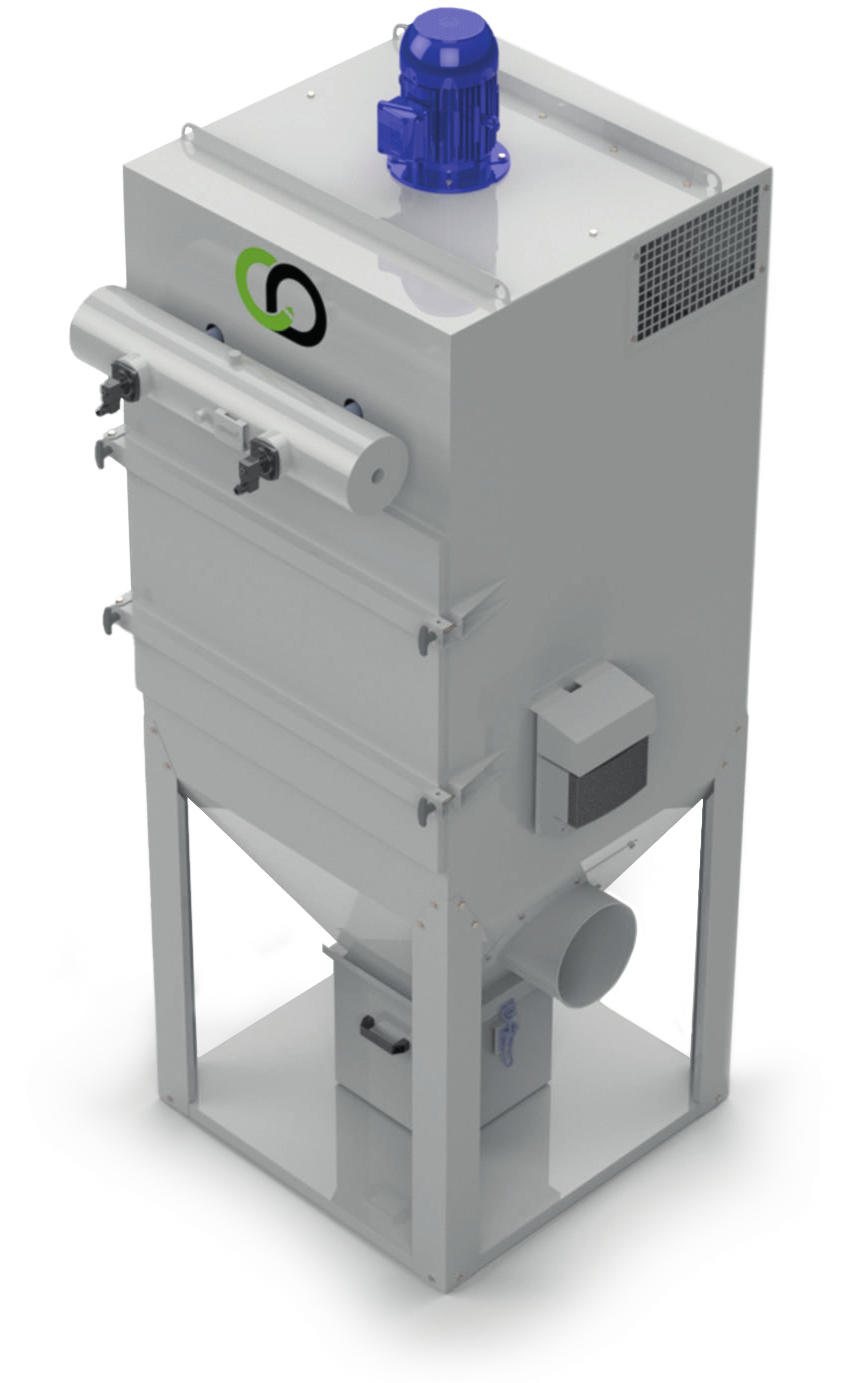
01 / Dust collector price
The first price factor is the airflow. It is calculated from actual needs: the airflow required at each hood and the number of workstations operating at the same time. Every unnecessary m³/h is paid for twice, at purchase and in use.
An oversized dust collector needs a larger filter area, so more cartridges or sleeves, a bigger housing and a more powerful fan. It costs more to buy, then uses more energy and more filters throughout its life. Conversely, an undersized unit captures poorly and clogs quickly.
Our engineering office therefore calculates the airflow as precisely as possible, workstation by workstation, before choosing the unit. The nature of the dust completes the selection: it determines the filter medium (polyester, antistatic polyester, PTFE) and any ATEX protections.
02 / Dust collector price
A complete installation also includes the hoods at the workstations (canopy hoods, arms, downdraft tables), the ductwork, the fan, the electrical connection and, in an ATEX zone, explosion protection: vents, isolation valves.
Capture makes the installation effective, and it is also what sets the airflow: well-designed hoods, placed as close as possible to the emissions, capture better with less air.
03 / Dust collector price
Over the life of the installation, operation counts as much as purchase: replacement of cartridges or sleeves, compressed air for cleaning, fan energy, emptying of bins or drums.
A medium suited to the dust extends the intervals between filter changes, and an airflow calculated precisely reduces the fan’s power consumption.
04 / Dust collector price
Compare units at the same operating point: the airflow actually obtained with the pressure drop of your ductwork, not the maximum catalogue airflow.
Check the scope of each quote: are hoods, ducts, installation, commissioning, documentation and ATEX protections included? Two prices can only be compared on the same scope.
05 / Dust collector price
To quote your installation, send us the nature of the dust and the materials worked, the number of workstations and those operating at the same time, the production hours, photos of the workstations and the planned location of the unit.
To replace an existing unit, attach a photo of its rating plate. We get back to you within 48 working hours.
Compare the equipment
These data sheets let you compare technologies and operating conditions. Compatibility with your process and the equipment configuration are confirmed before the final choice.
Low dust loads
250 – 2 000 m³/h
Data sheet Bag-type DA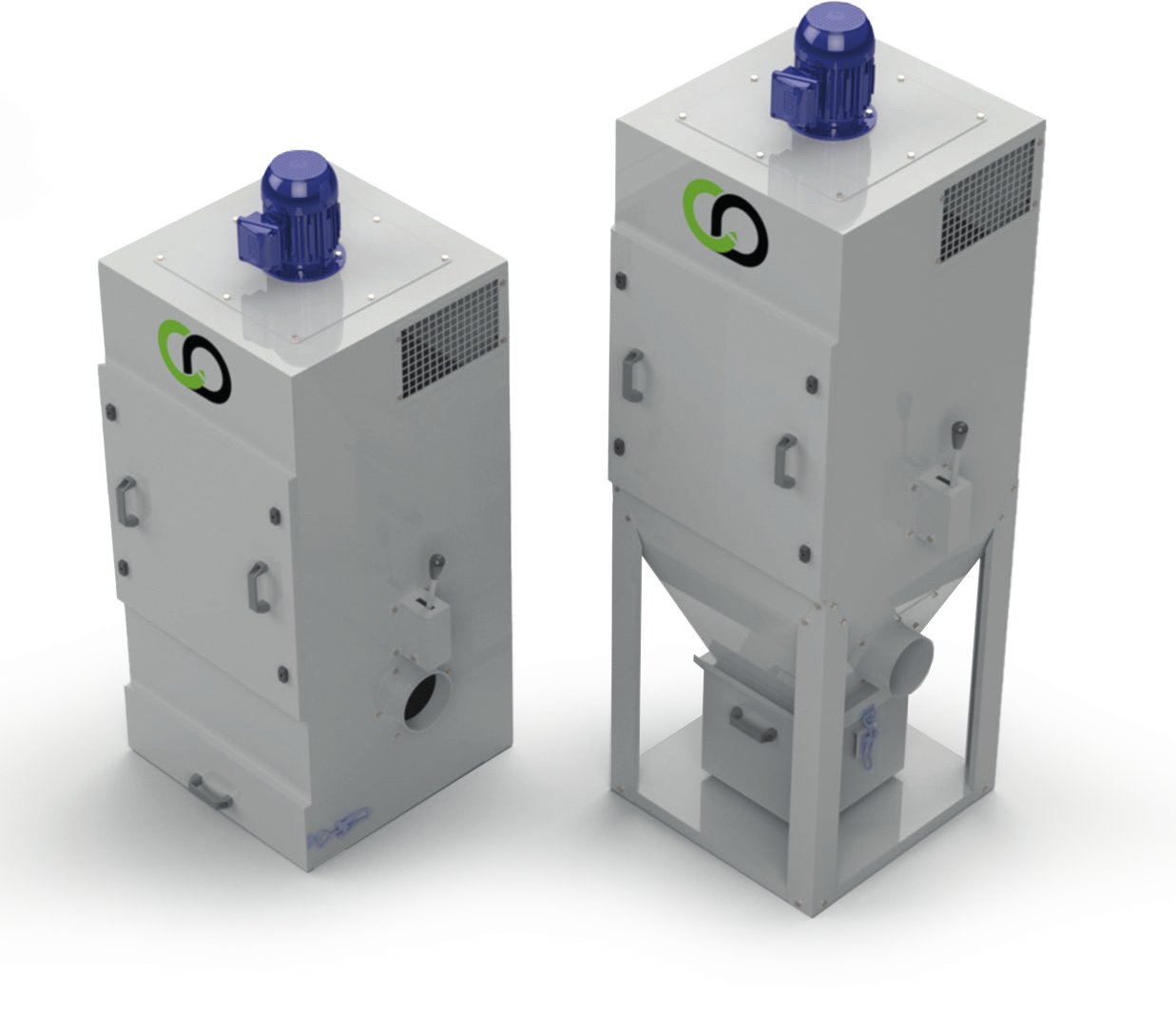
Occasional use
400 – 5 000 m³/h
Data sheet DA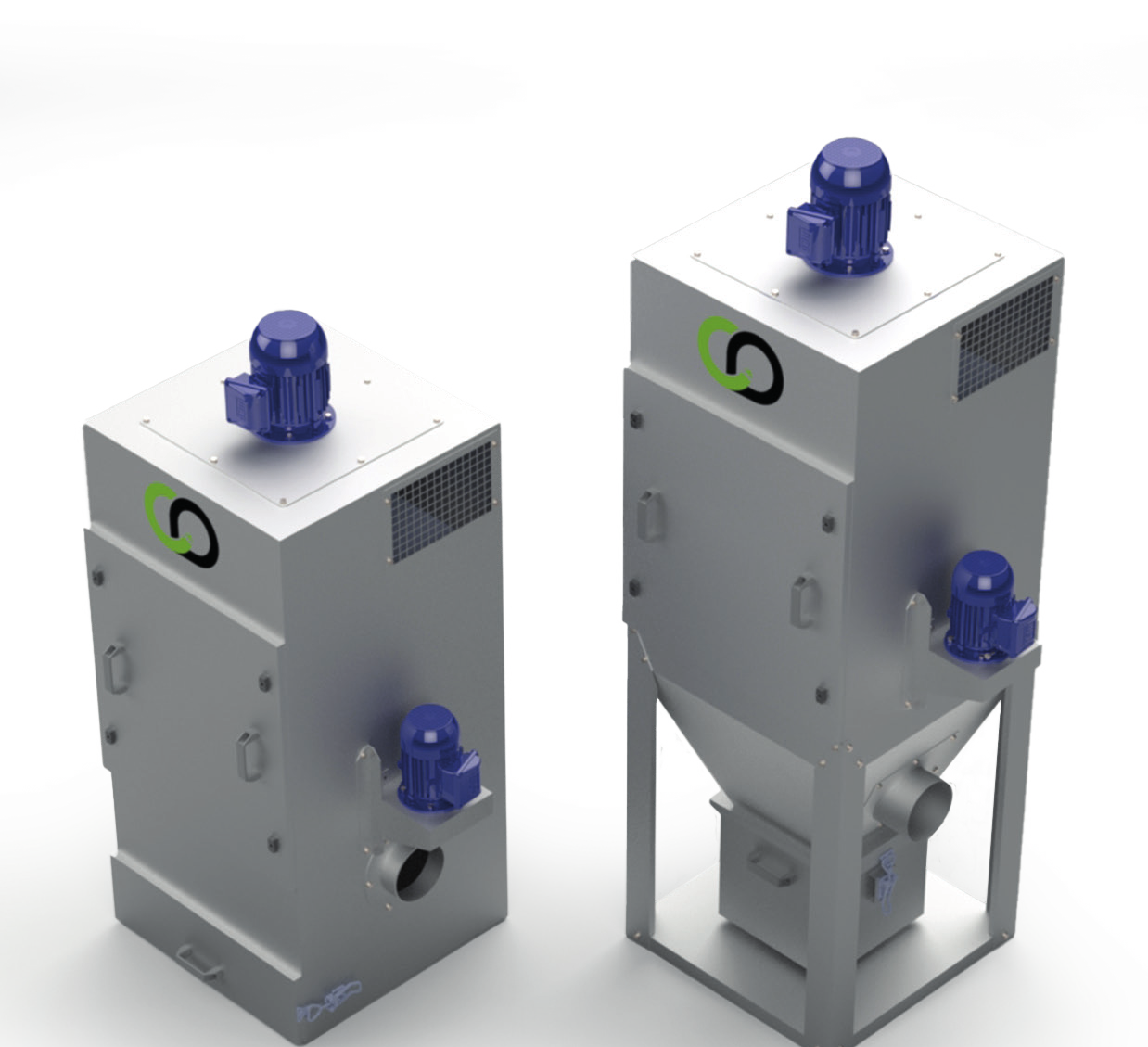
Daily intermittent use
400 – 5 000 m³/h
Data sheet DASContinuous production 24/7
600 – 19 200 m³/h
Data sheet DAS CCUseful answers
The price depends first on the airflow to handle, then on the nature of the dust and the scope: unit only or complete installation with hoods and ductwork. We quote each project from your production data.
More airflow requires more filter area, a bigger housing and a more powerful fan. The difference is paid at purchase, then every year in energy and filters.
Yes. The replacement frequency depends on the dust, the medium and the cleaning settings. We supply replacement cartridges and sleeves, including for units of other makes.
Continue your selection
Your industrial project
Describe your workstations, your dust and your production hours: our engineering office sends you a configuration and a costed quote.
Contact us
A technician from our engineering office studies your needs and proposes the right solution for your workshop: machine, capture, ductwork and filtration.
Reply within 48 working hours.
Your request, step by step
Pollutant, workstations, constraints: a few lines are enough. A photo of the installation helps us a lot.
Capture, airflow, ductwork and filtration are sized for your site, together with you if anything needs clarifying.
Machine, options and price, in detail: you decide with full knowledge of the facts.
Your cookie choices
With your consent, we use audience and advertising measurement cookies to understand how the site is used, improve it and see which ads bring us enquiries. You can accept, refuse or choose, and change your choice at any time. Learn more