
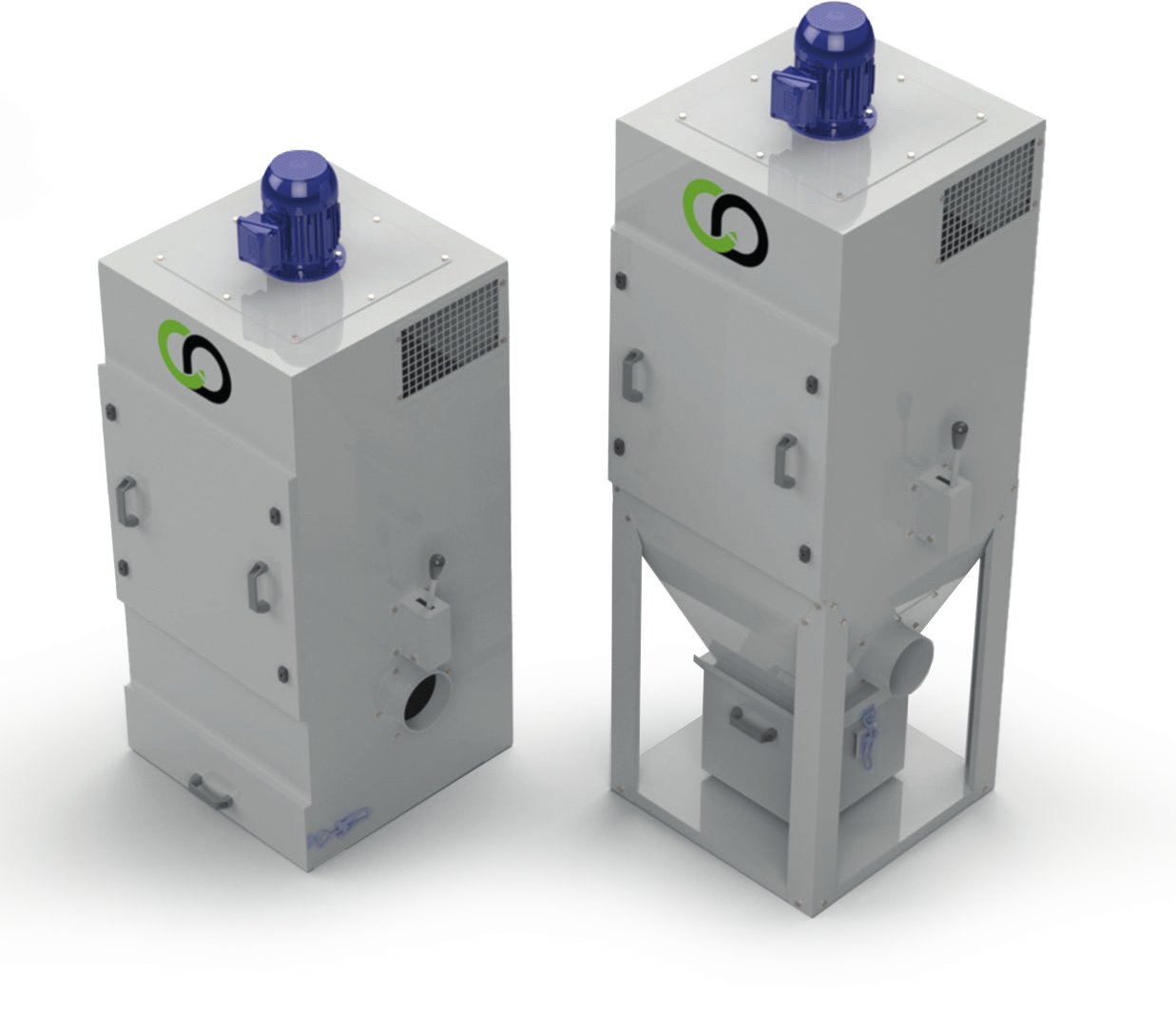
DA
Occasional use
400 – 5 000 m³/h
Data sheet DAFrench industrial expertise · Since 1994
Zones 20, 21 and 22, dust explosions, vents and isolation: what you need to know to collect dust in an ATEX zone.
01 / ATEX dust extraction
Any combustible dust finer than about 500 µm can form an explosive atmosphere from a few tens of grams per cubic metre (INRS ED 6441): flour, sugar, wood, plastics, aluminium, magnesium. The inside of a dust collector brings together precisely a dust cloud and a closed volume.
02 / ATEX dust extraction
Directive 1999/92/EC classifies the places where an explosive dust atmosphere can form into three zones. In zone 20, the dust cloud is present continuously, for long periods or frequently, for example inside a dust collector or a silo. In zone 21, it is likely to form occasionally in normal operation. In zone 22, it is not likely to form in normal operation, or only briefly.
Zoning is the operator’s responsibility and appears in its explosion protection document. Send it with your enquiry: it determines the equipment and protections required on the dust collector, the ductwork and the fan.
03 / ATEX dust extraction
A dust explosion requires a combustible dust in suspension, in sufficient concentration, oxygen and an ignition source, in a confined volume. Laboratory tests (Kst, Pmax, minimum ignition energy) characterise the violence of the explosion and how easily your dust ignites.
On a dust collector, protection often relies on explosion vents, which release the pressure towards a safe area, and on isolation devices, such as an explosion isolation flap valve on the inlet duct, to prevent propagation into the workshop. Their sizing depends on the characteristics of the dust and is validated by a study.
04 / ATEX dust extraction
DA, DAS and DAS CC are available in ATEX execution. An ATEX execution combines explosion vents, an isolation valve on the inlet, a fan and electrical equipment suited to the zone, an antistatic medium and electrical continuity of the whole assembly.
The vents are directed towards an area without personnel; a unit installed indoors requires a flameless venting device or a discharge duct to the outside.
05 / ATEX dust extraction
Your explosion protection document with the zoning, the nature of the dust and any test results, the airflow, the planned location (indoors or outdoors) and the workstations connected.
Compare the equipment
These data sheets let you compare technologies and operating conditions. Compatibility with your process and the equipment configuration are confirmed before the final choice.
Occasional use
400 – 5 000 m³/h
Data sheet DA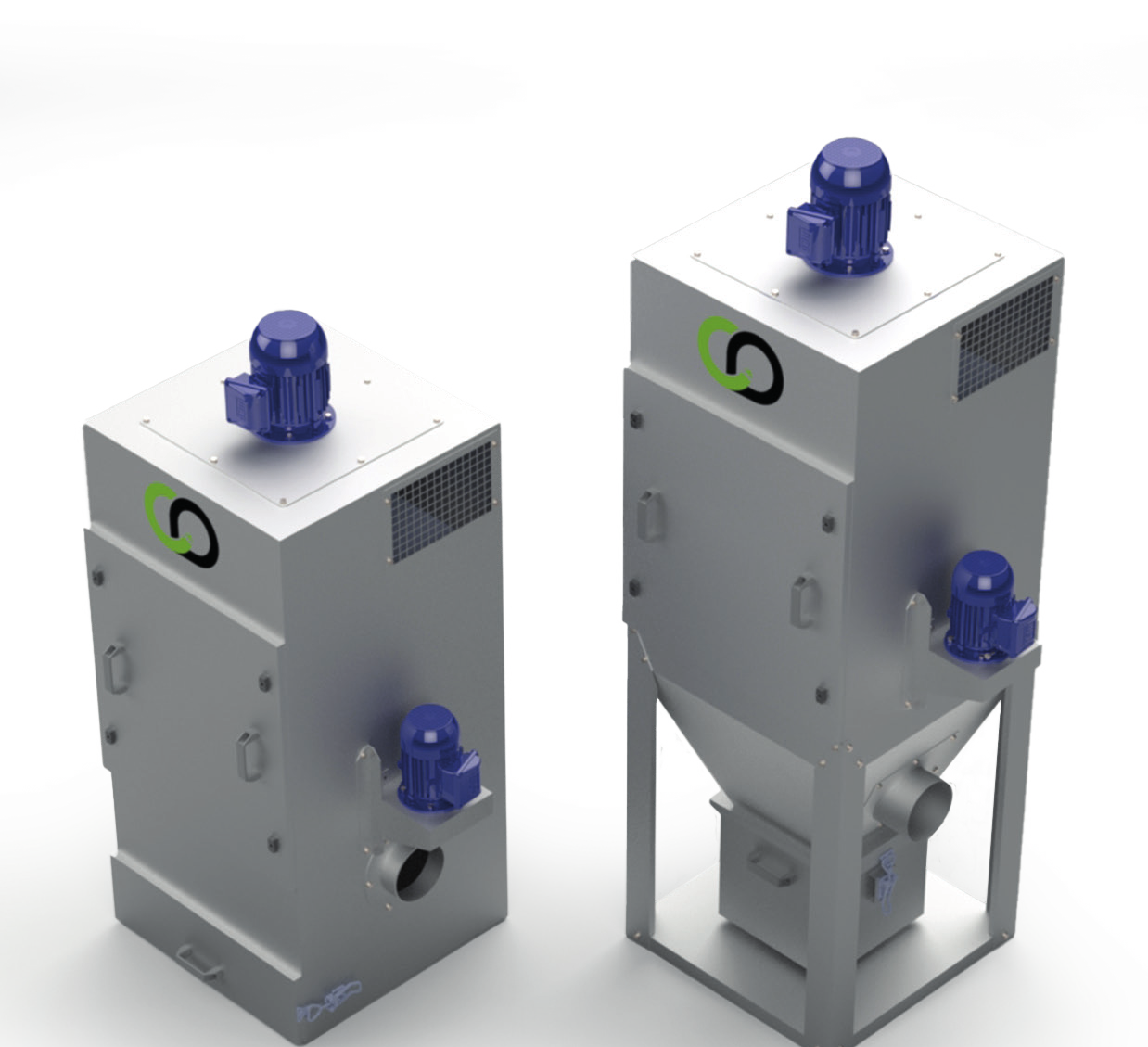
Daily intermittent use
400 – 5 000 m³/h
Data sheet DAS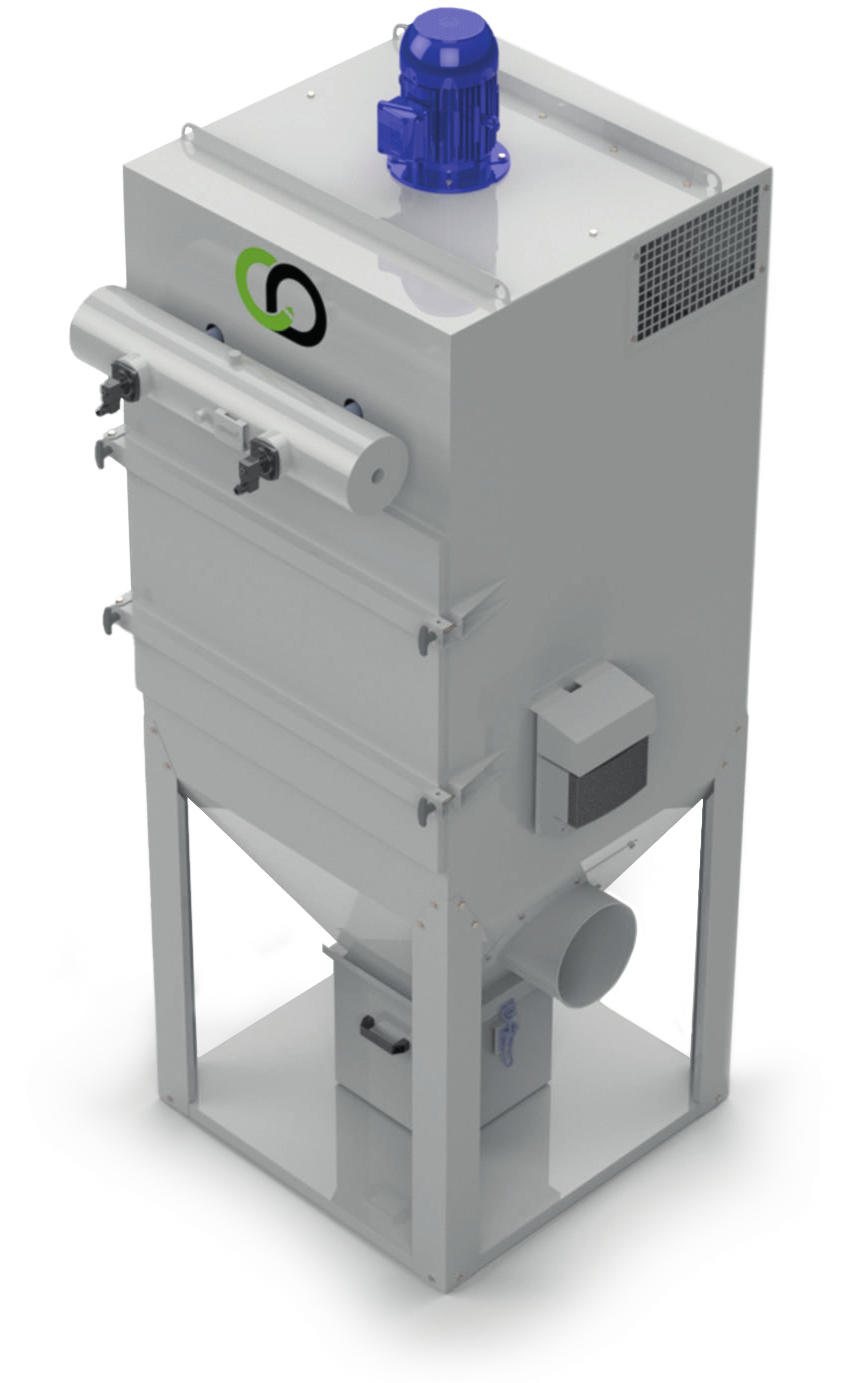
Continuous production 24/7
600 – 19 200 m³/h
Data sheet DAS CCUseful answers
No: the ATEX execution is a specific version, built and documented for the zone and the dust on your site.
No. It removes one ignition source, but the unit must also withstand the explosion or vent it: vents and isolation valve.
A panel that opens at a defined pressure during an explosion. It limits the overpressure in the dust collector and directs the effects towards an area without personnel. Its area depends on the volume of the unit and the dust (Kst, Pmax).
Most often zone 20 or 21 for a combustible dust. The classification that applies is the one in your explosion protection document.
Continue your selection
Your industrial project
Send us photos of the workstations, the materials worked, which workstations run at the same time and your working hours: we size the capture and filtration and send you a costed quote.
Contact us
A technician from our engineering office studies your needs and proposes the right solution for your workshop: machine, capture, ductwork and filtration.
Reply within 48 working hours.
Your request, step by step
Pollutant, workstations, constraints: a few lines are enough. A photo of the installation helps us a lot.
Capture, airflow, ductwork and filtration are sized for your site, together with you if anything needs clarifying.
Machine, options and price, in detail: you decide with full knowledge of the facts.
Your cookie choices
With your consent, we use audience and advertising measurement cookies to understand how the site is used, improve it and see which ads bring us enquiries. You can accept, refuse or choose, and change your choice at any time. Learn more