
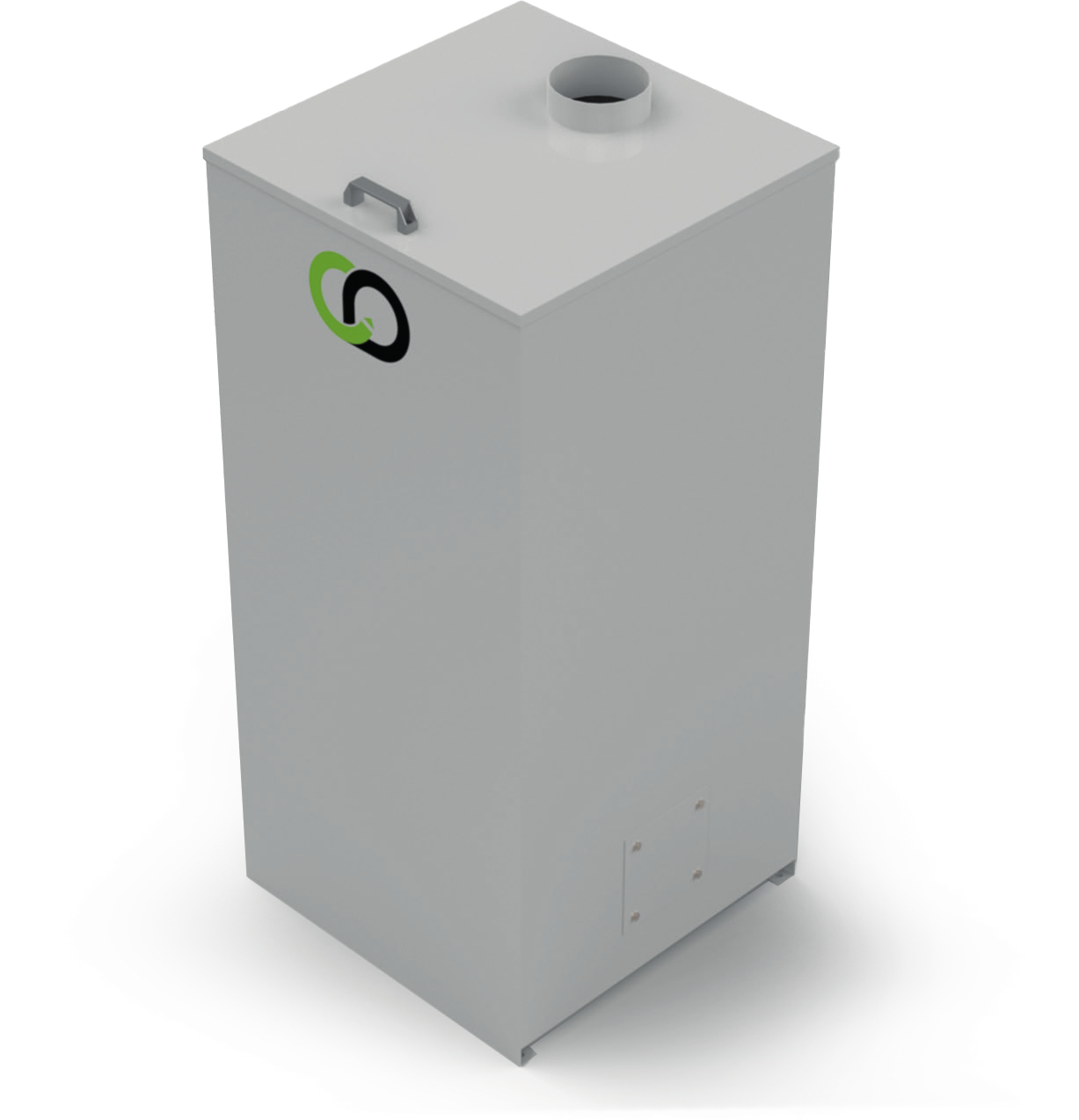
Bag-type DA
Low dust loads
250 – 2 000 m³/h
Data sheet Bag-type DAFrench industrial expertise · Since 1994
Wheel guard, capture velocity, airflow, ductwork and dust collector: the rules for effective extraction on a polishing lathe or a line of polishing machines.
01 / Polishing
The wheel tears metal particles from the part, but also fibres from the wheel (cotton, sisal) and residues of polishing compound. Everything leaves at high speed in the plane of the wheel, in line with the contact point: that is the direction in which the guard must receive the stream.
Fibres and greasy compound form a sticky cake on the filters. On a polishing station, filter area and filter cleaning therefore matter as much as airflow.
02 / Polishing
The INRS places grinding and high-speed projections in the most demanding category: a capture velocity of 2.5 to 10 m/s at the emission point (ED 695, table III). An opening placed at a distance never achieves it: a guard must surround the wheel, leaving only the working area open.
In front of an opening, the extraction velocity falls to a tenth of its value at a distance equal to its diameter. Doubling the distance means multiplying the airflow by four. A well-adjusted guard costs less than a bigger fan.
03 / Polishing
Grinding and polishing dust is conveyed at a minimum of 18 to 20 m/s (ED 695, table VI). Below that, it settles in the ducts; above 25 m/s, noise and pressure drop increase. Each branch is sized to stay within this range.
On a line of polishing machines, the ductwork is designed for the wheels actually used at the same time, with a damper at each station to close those that are idle.
04 / Polishing
DA with bag for an isolated polishing lathe with a light load; DA or DAS when regular stops allow the filters to be cleaned; DAS CC for continuous production, with compressed-air pulse cleaning during operation.
Against clogging by greasy compounds, a cartridge with a PTFE membrane releases the cake better than standard polyester. Polishing aluminium needs a separate study: see metal dust.
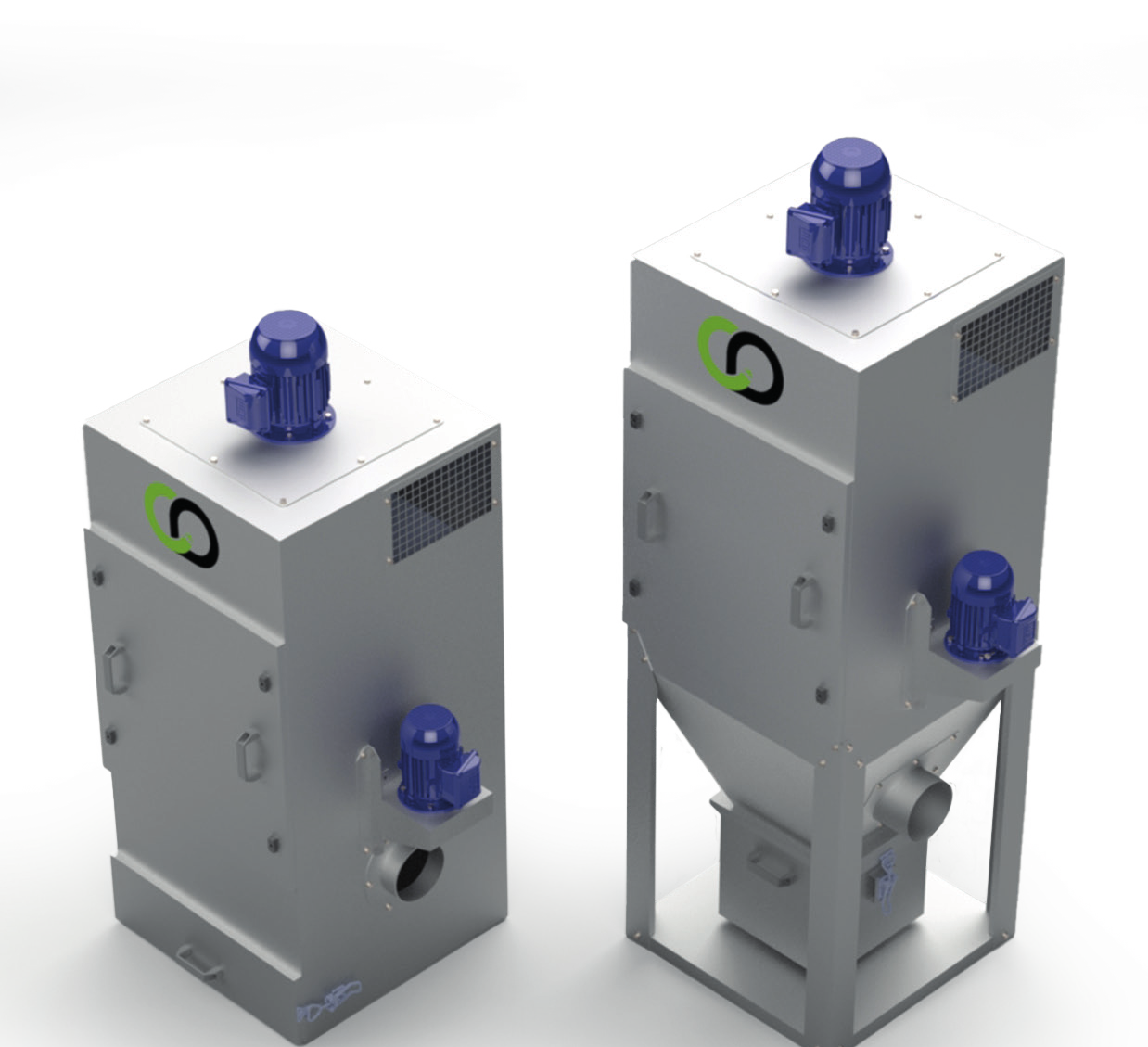
Compare the equipment
These data sheets let you compare technologies and operating conditions. Compatibility with your process and the equipment configuration are confirmed before the final choice.
Low dust loads
250 – 2 000 m³/h
Data sheet Bag-type DA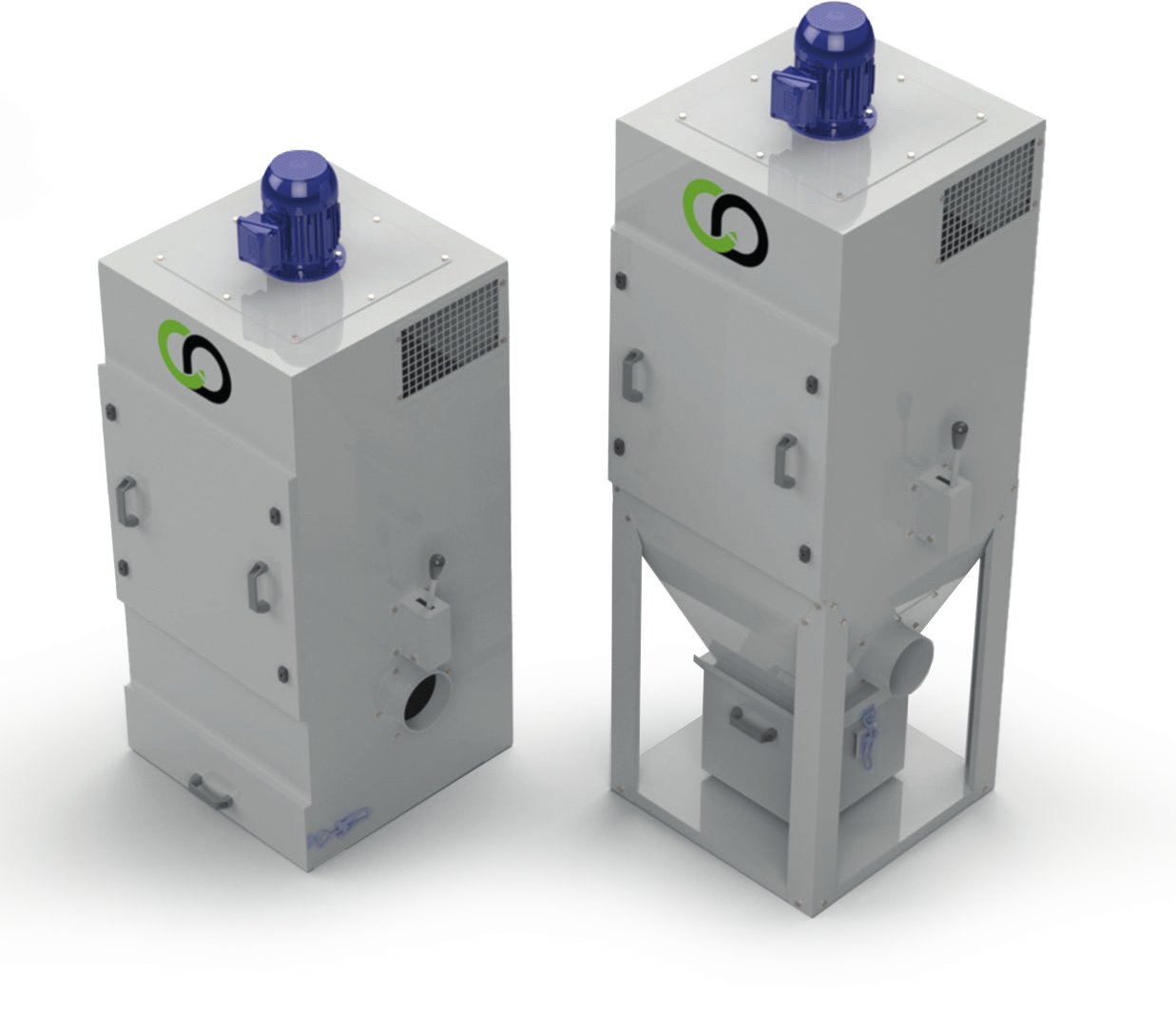
Occasional use
400 – 5 000 m³/h
Data sheet DADaily intermittent use
400 – 5 000 m³/h
Data sheet DAS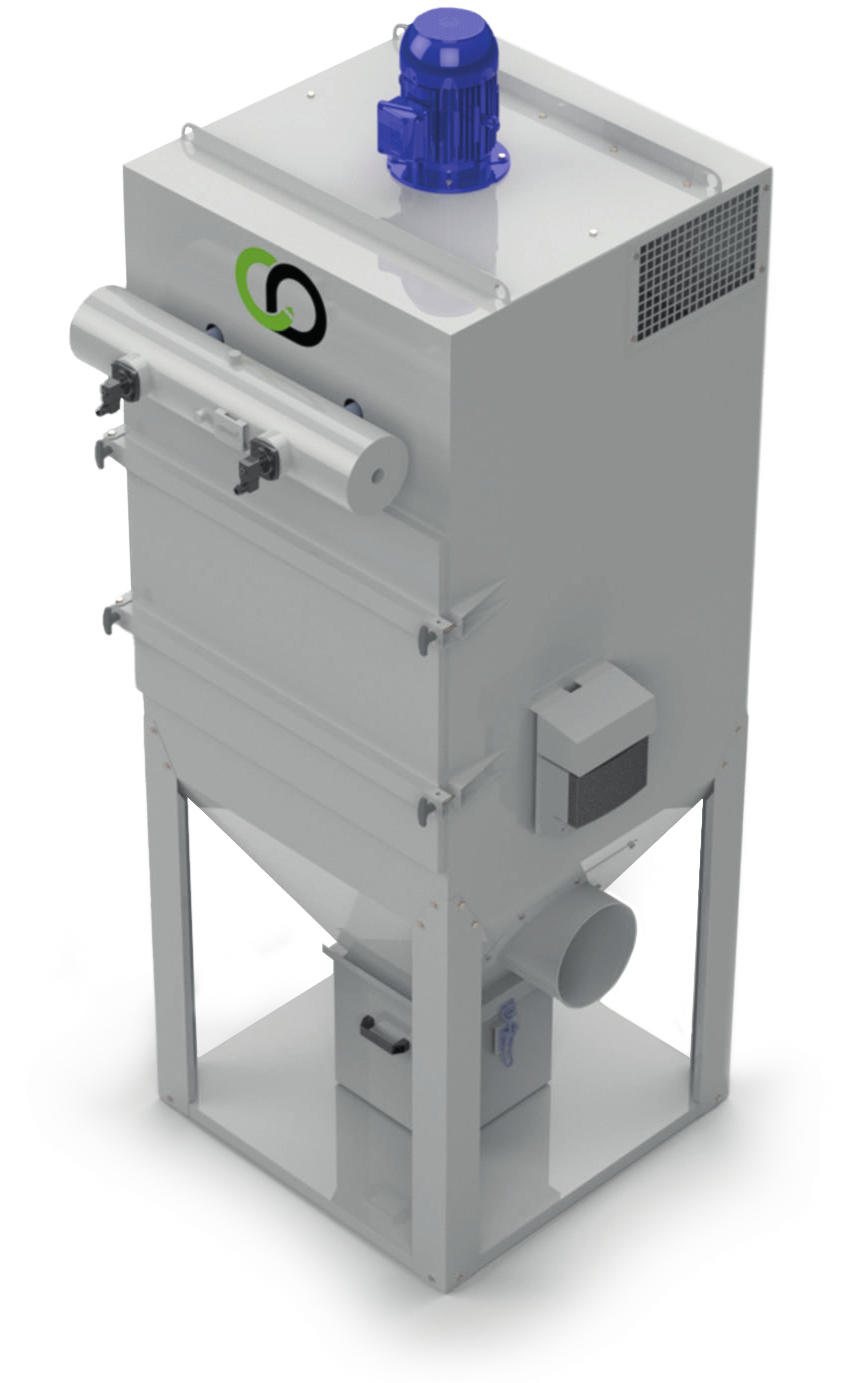
Continuous production 24/7
600 – 19 200 m³/h
Data sheet DAS CCUseful answers
The airflow is calculated from the open area of the guard and the target velocity at the contact point, at least 2.5 m/s according to the INRS. The more the guard surrounds the wheel, the smaller the opening and the lower the airflow. With a photo of the lathe and the wheel diameters, we calculate the airflow for each station.
Yes, by designing the ductwork for the stations used at the same time and fitting a damper on each branch. However, aluminium and steel dust should not be brought together in the same filter: the mixture can ignite.
Polishing compounds and wheel fibres form a greasy deposit that filter cleaning removes poorly. The remedies: more filter area, a PTFE medium and a pressure-drop indicator to clean at the right time.
Continue your selection
Your industrial project
Send us photos of the workstations, the materials worked, which workstations run at the same time and your working hours: we size the capture and filtration and send you a costed quote.
Contact us
A technician from our engineering office studies your needs and proposes the right solution for your workshop: machine, capture, ductwork and filtration.
Reply within 48 working hours.
Your request, step by step
Pollutant, workstations, constraints: a few lines are enough. A photo of the installation helps us a lot.
Capture, airflow, ductwork and filtration are sized for your site, together with you if anything needs clarifying.
Machine, options and price, in detail: you decide with full knowledge of the facts.
Your cookie choices
With your consent, we use audience and advertising measurement cookies to understand how the site is used, improve it and see which ads bring us enquiries. You can accept, refuse or choose, and change your choice at any time. Learn more