
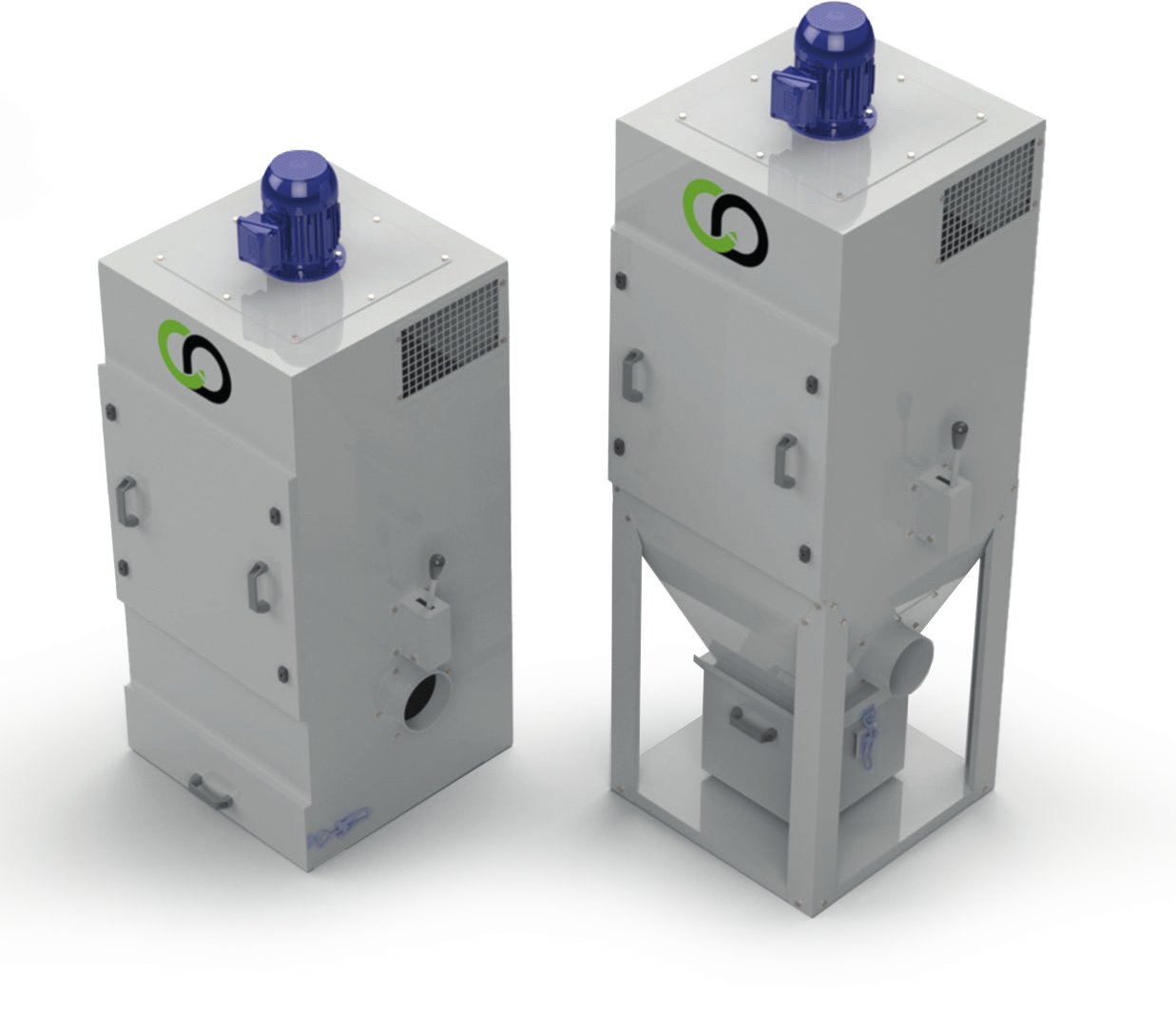
DA
Occasional use
400 – 5 000 m³/h
Data sheet DAFrench industrial expertise · Since 1994
Belt sander, portable sander or hand sanding: capture the dust at source, on the tool or at the workstation, then filter it.
01 / Industrial sanding
On a belt sander, the belt throws dust out like a grinding wheel: the belt is enclosed as close as possible to the contact point, with an opening in the direction of rotation.
On a portable sander, the most effective solution is extraction built into the tool, connected to a high-vacuum central unit: low airflow, high negative pressure. For hand sanding or medium-sized parts, a downdraft table or backdraft hood captures under or behind the part.
02 / Industrial sanding
An orbital or vibrating sander with built-in extraction needs at least 80 m³/h per tool, on a high-vacuum system: small diameters, high velocities and a dedicated central extraction unit (specifications of the French Health Insurance “High-vacuum system capture” prevention subsidy; INRS ED 6052).
This system is not connected to the one serving tables or guards: their operating pressures are completely different. Each system has its own central unit, and the captured air is discharged outside the premises.
03 / Industrial sanding
Sanding is an active emission: 1 to 2.5 m/s at the emission point (INRS ED 695). For medium-sized parts, a downdraft table or backdraft hood placed behind the part reaches this velocity with a reasonable airflow.
For large parts (car bodies, aerospace components, composite panels), an open-front booth is required: 0.5 to 1 m/s across the opening, i.e. 13,500 m³/h for a 3 × 2.5 m opening at 0.5 m/s.
04 / Industrial sanding
Sanding dust mixes the base material, the abrasive and the layers removed: paints, fillers, primers. It is often these layers that set the level of risk and the choice of filter.
Wood dust is classified as carcinogenic, with a limit value of 1 mg/m³ over 8 hours. Composites and some paints produce combustible dust.
05 / Industrial sanding
In the ducts, dry sanding abrasives are conveyed at a minimum of 18 to 20 m/s (INRS ED 695, table VI).
The dust collector follows the production rate: DA or DAS for intermittent use with cleaning when stopped, DAS CC for continuous sanding. Fine paint or composite dust justifies a high-efficiency medium, or even an H13 stage before discharge.
Compare the equipment
These data sheets let you compare technologies and operating conditions. Compatibility with your process and the equipment configuration are confirmed before the final choice.
Occasional use
400 – 5 000 m³/h
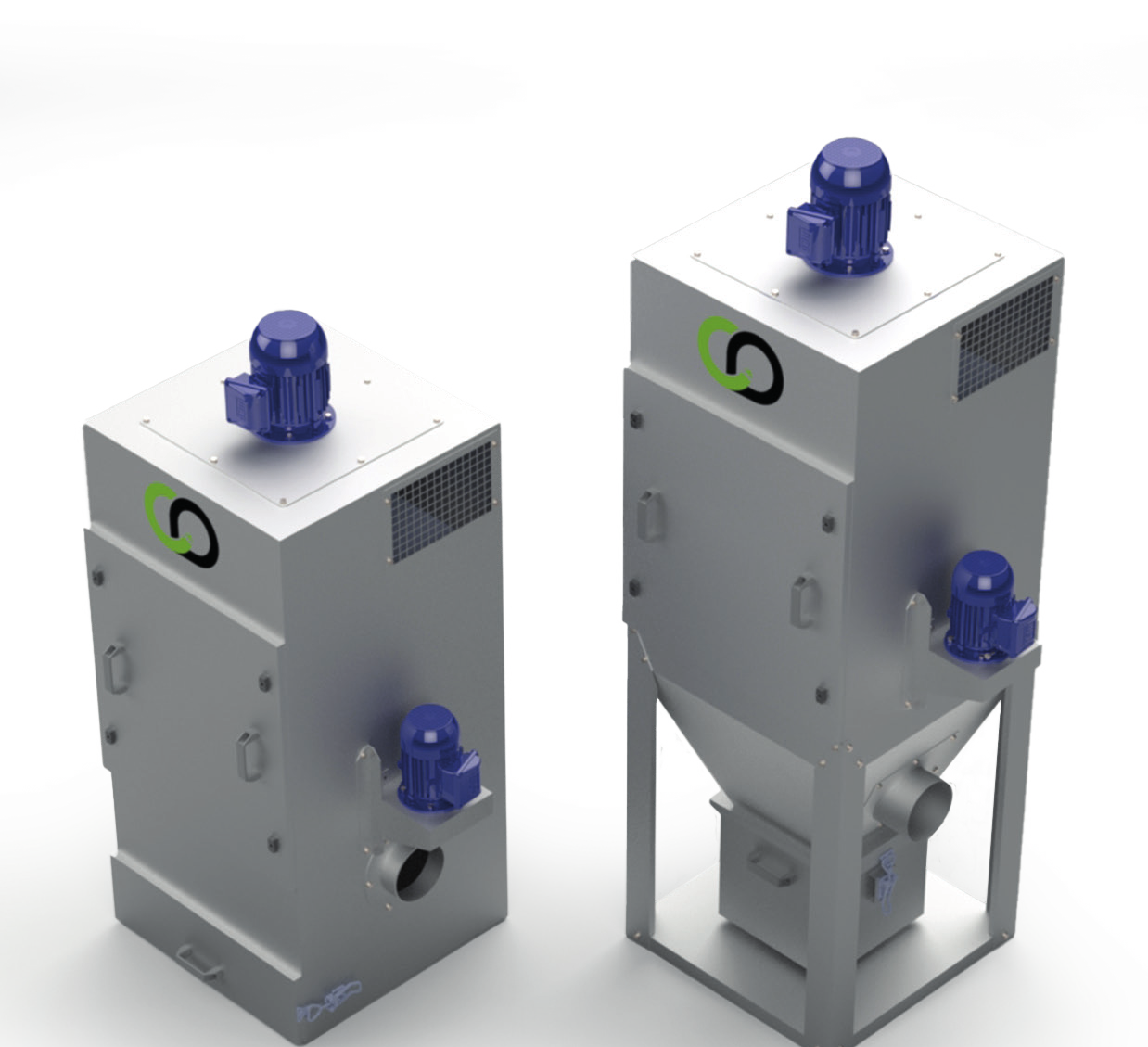
Data sheet DADaily intermittent use
400 – 5 000 m³/h
Data sheet DAS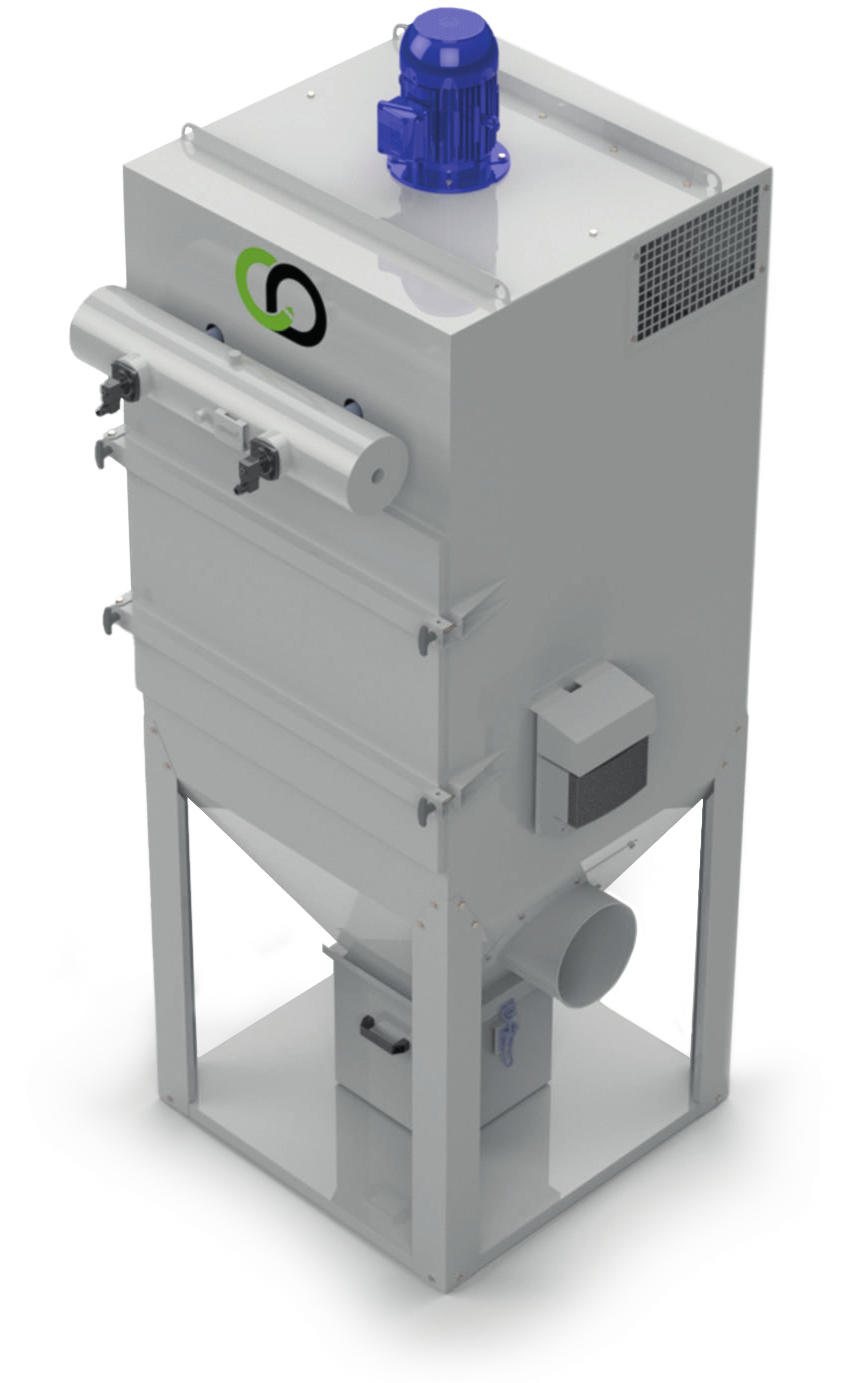
Continuous production 24/7
600 – 19 200 m³/h
Data sheet DAS CCUseful answers
No. The belt sander is enclosed at the contact point, with a high airflow. The portable sander is connected through its hose to a high-vacuum central unit, with a low airflow.
The base material and the layers removed, with their safety data sheets. They determine the filter medium.
At least 80 m³/h for an orbital or vibrating sander, on a high-vacuum system (French Health Insurance specifications).
In France, yes: the French Health Insurance “High-vacuum system capture” prevention subsidy funds the ductwork and the central unit, under its specifications. Check the current conditions with your regional Carsat or the Cramif.
This dust is fine and often combustible: high-efficiency medium, an H13 stage before discharge if necessary, and ATEX execution depending on the dust (see our ATEX guide).
Continue your selection
Your industrial project
Send us photos of the workstations, the materials worked, which workstations run at the same time and your working hours: we size the capture and filtration and send you a costed quote.
Contact us
A technician from our engineering office studies your needs and proposes the right solution for your workshop: machine, capture, ductwork and filtration.
Reply within 48 working hours.
Your request, step by step
Pollutant, workstations, constraints: a few lines are enough. A photo of the installation helps us a lot.
Capture, airflow, ductwork and filtration are sized for your site, together with you if anything needs clarifying.
Machine, options and price, in detail: you decide with full knowledge of the facts.
Your cookie choices
With your consent, we use audience and advertising measurement cookies to understand how the site is used, improve it and see which ads bring us enquiries. You can accept, refuse or choose, and change your choice at any time. Learn more