
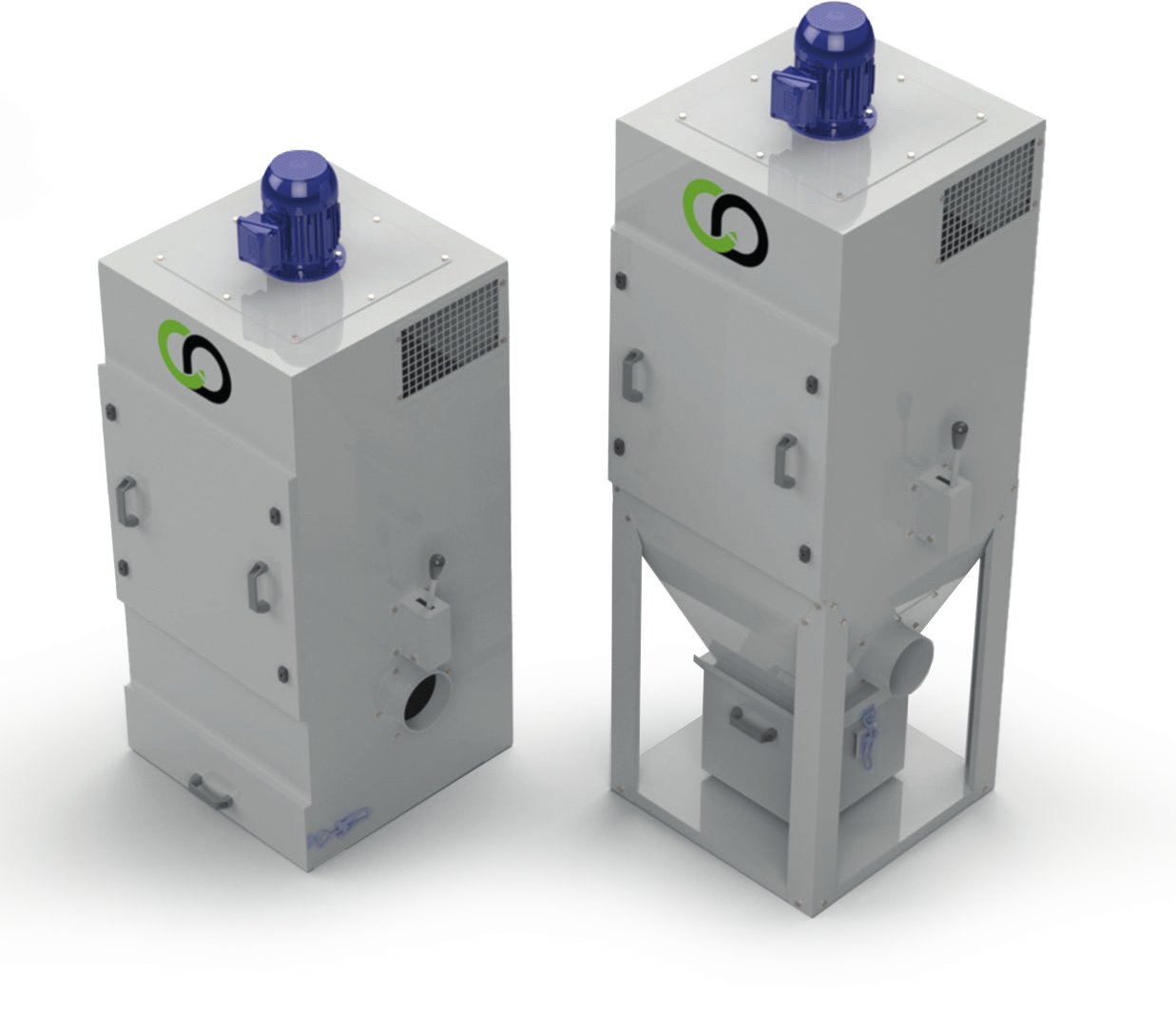
DA
Occasional use
400 – 5 000 m³/h
Data sheet DAFrench industrial expertise · Since 1994
Bench grinders, hand grinding on parts, surface grinding: capture velocities, sparks, ductwork and choice of dust collector for your grinding stations.
01 / Grinding
The wheel throws particles out at high speed. For this type of emission the INRS requires a capture velocity of 2.5 to 10 m/s at the emission point (ED 695, table III), ten times more than for simple evaporation.
On a bench grinder, this velocity is achieved with an enclosing guard and an opening placed in line with the projections. With a portable grinder, capture is by a backdraft hood or a downdraft table, as close to the part as possible.
02 / Grinding
Three components: the metal of the part, the abrasive of the wheel (corundum, silicon carbide) and its bond. On stainless steel, the dust contains chromium and nickel, whose limit values are far lower than those for dust without specific effects.
This mixture is abrasive for ducts and filters: long-radius bends, conveying velocity maintained without excess, and abrasion-resistant media.
03 / Grinding
A Ø 150 mm opening placed 10 cm from the wheel, target velocity 2.5 m/s: Q = 2.5 × (10 × 0.1² + 0.0177) = 0.29 m³/s, or 1,060 m³/h.
The same opening at 20 cm needs 3,760 m³/h: 3.5 times more air for the same efficiency. An enclosing guard as close as possible to the wheel remains the most economical solution.
04 / Grinding
Grinding sparks can reach the filter and ignite the dust cake. A spark arrestor or baffle before the dust collector stops them, and a sufficient length of duct lets them cool.
Never connect a grinding station to ductwork that also extracts combustible materials: sawdust, paper, paint dust.
05 / Grinding
Dry grinding produces dust, handled by a filter dust collector. With cutting fluid, grinding produces an oil mist: it is handled by an oil mist filter (BHS or HE central unit), not by a dust collector.
In the ducts, grinding dust is conveyed at a minimum of 18 to 20 m/s (ED 695, table VI).
06 / Grinding
In a shop where grinding takes place, 8-hour average concentrations must not exceed 4 mg/m³ for total dust and 0.9 mg/m³ for respirable dust (French Labour Code, art. R4222-10). Alloying metals, such as the chromium or nickel in stainless steel, have their own, lower limit values.
The extraction installation is inspected at least once a year: total airflow, pressures or velocities at the reference points, condition of the components (French decree of 8 October 1987).
Compare the equipment
These data sheets let you compare technologies and operating conditions. Compatibility with your process and the equipment configuration are confirmed before the final choice.
Occasional use
400 – 5 000 m³/h
Data sheet DA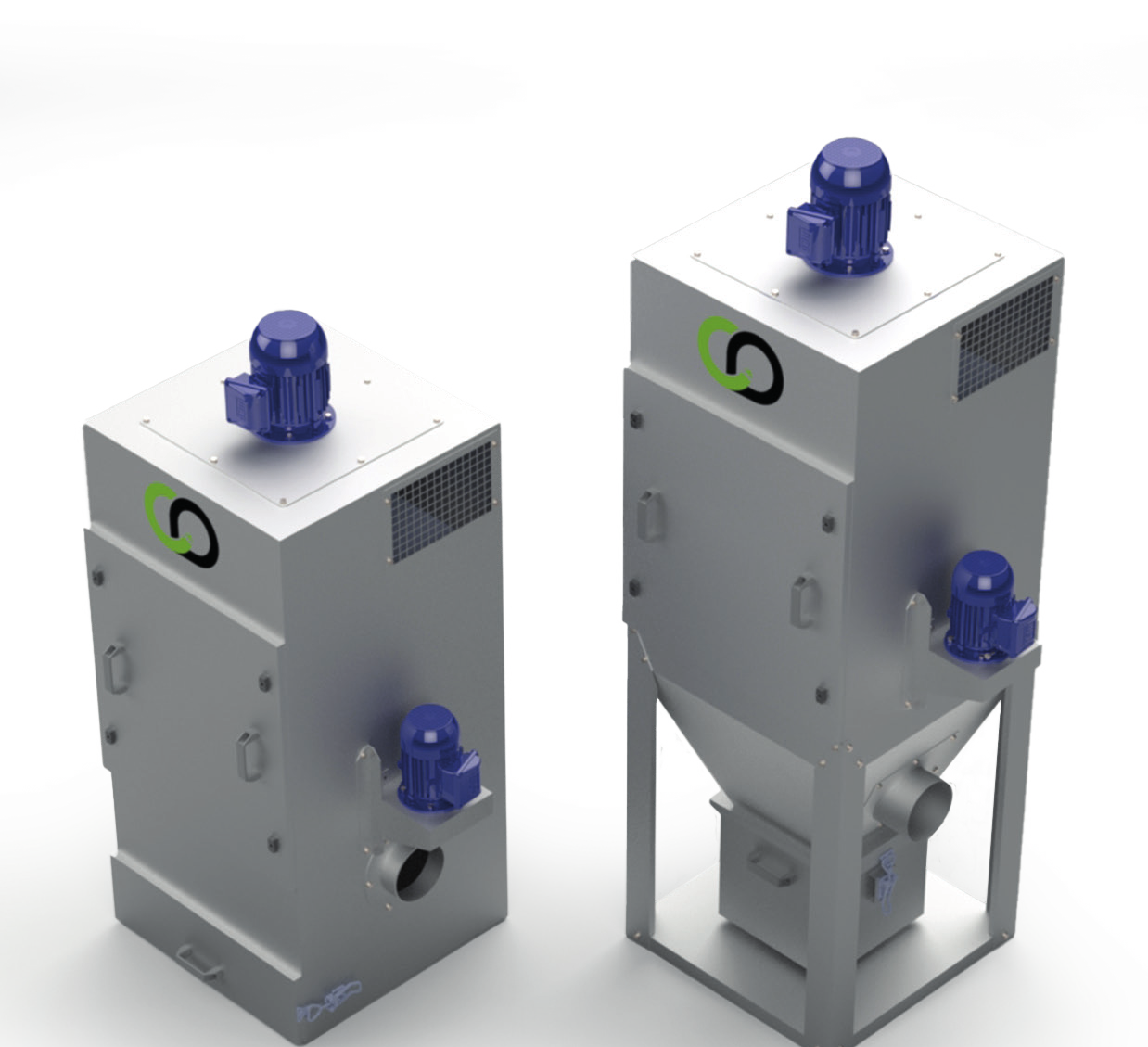
Daily intermittent use
400 – 5 000 m³/h
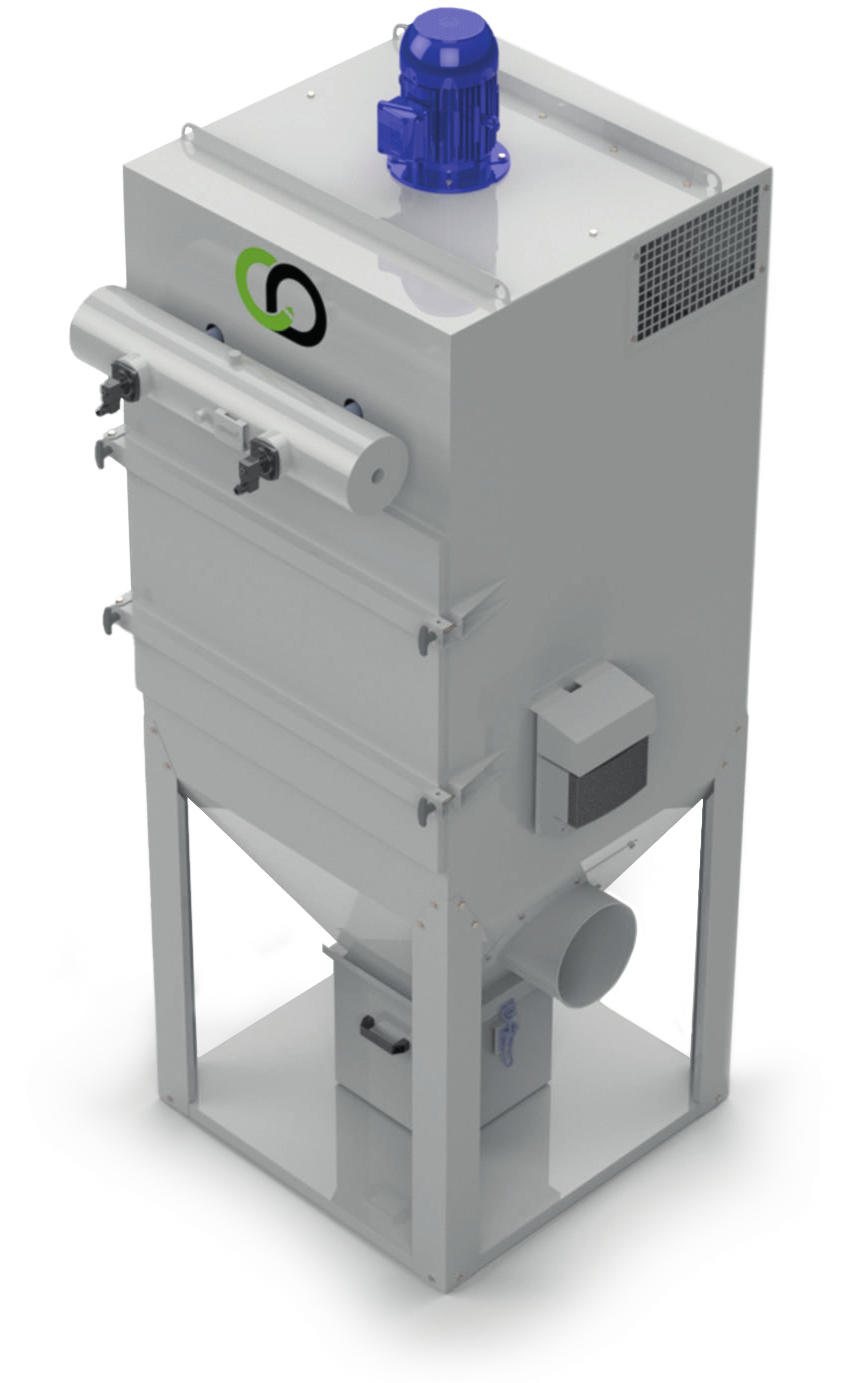
Data sheet DASContinuous production 24/7
600 – 19 200 m³/h
Data sheet DAS CC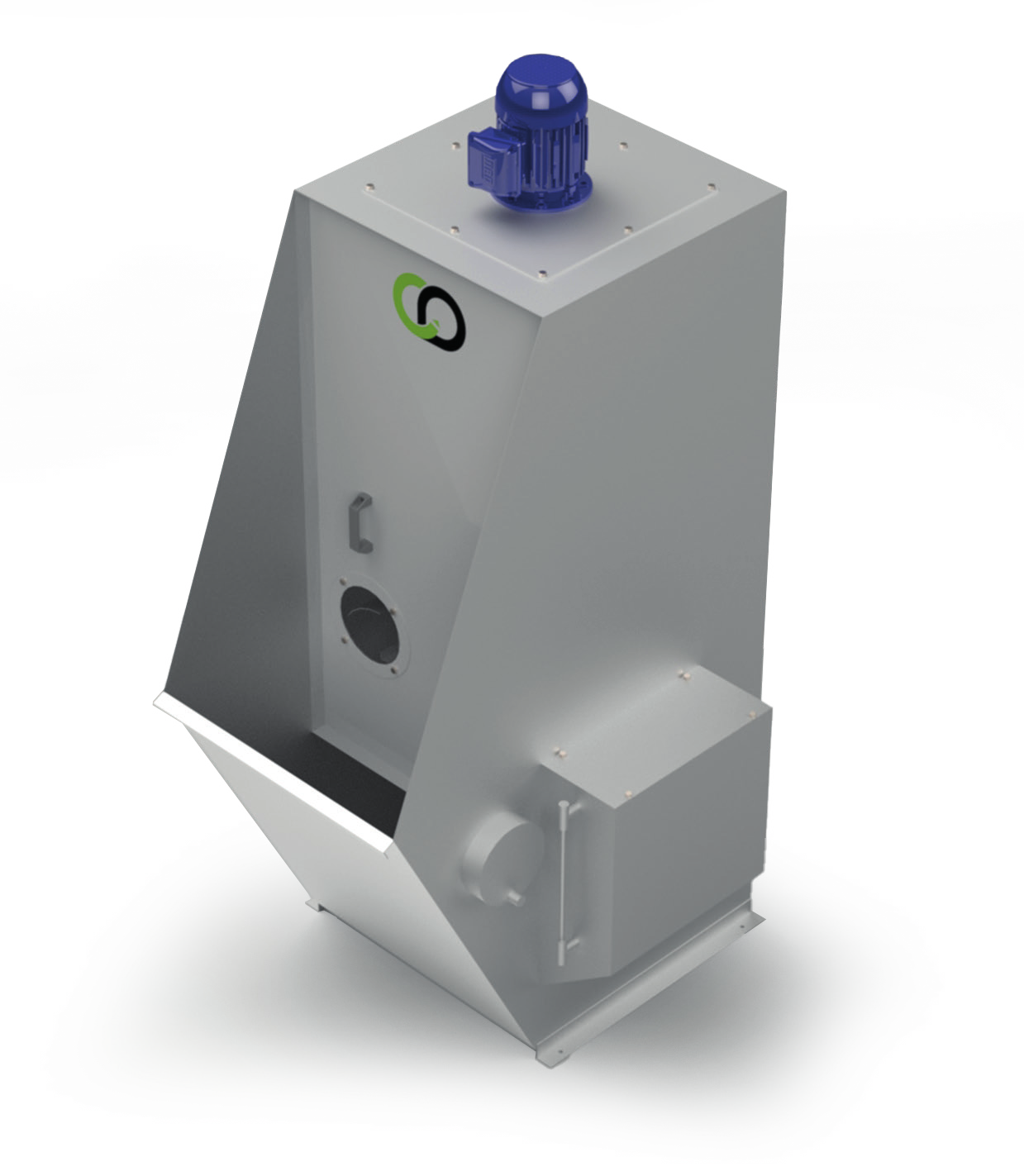
Wet dust collection
600 – 5 000 m³/h
Data sheet HYDROUseful answers
Rarely. Velocity falls very quickly with distance: doubling the distance between the opening and the wheel means quadrupling the airflow. Moving the guard closer or enclosing it is almost always more effective and cheaper.
The DAS CC: its cartridges are cleaned by compressed-air pulses during operation, without stopping. For intermittent use, a DA or DAS is enough.
Yes as soon as sparks can reach the filters, which is the case on most grinding stations connected by a short duct.
It depends on the hood and its distance: about 1,060 m³/h for a Ø 150 opening 10 cm from the wheel, much more if it is further away. An enclosing guard greatly reduces this airflow.
Continue your selection
Your industrial project
Send us photos of the workstations, the materials worked, which workstations run at the same time and your working hours: we size the capture and filtration and send you a costed quote.
Contact us
A technician from our engineering office studies your needs and proposes the right solution for your workshop: machine, capture, ductwork and filtration.
Reply within 48 working hours.
Your request, step by step
Pollutant, workstations, constraints: a few lines are enough. A photo of the installation helps us a lot.
Capture, airflow, ductwork and filtration are sized for your site, together with you if anything needs clarifying.
Machine, options and price, in detail: you decide with full knowledge of the facts.
Your cookie choices
With your consent, we use audience and advertising measurement cookies to understand how the site is used, improve it and see which ads bring us enquiries. You can accept, refuse or choose, and change your choice at any time. Learn more